



Next – Project

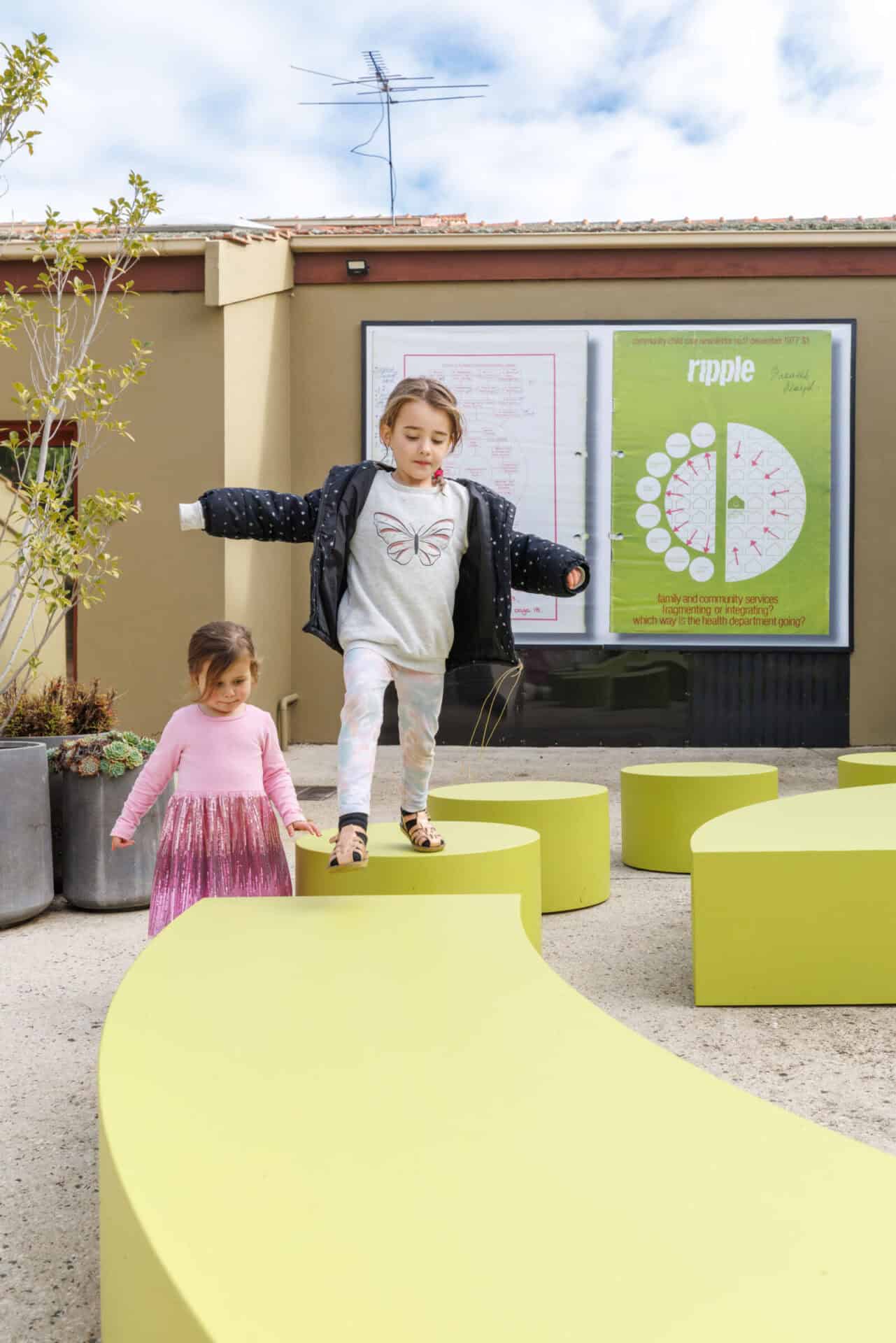
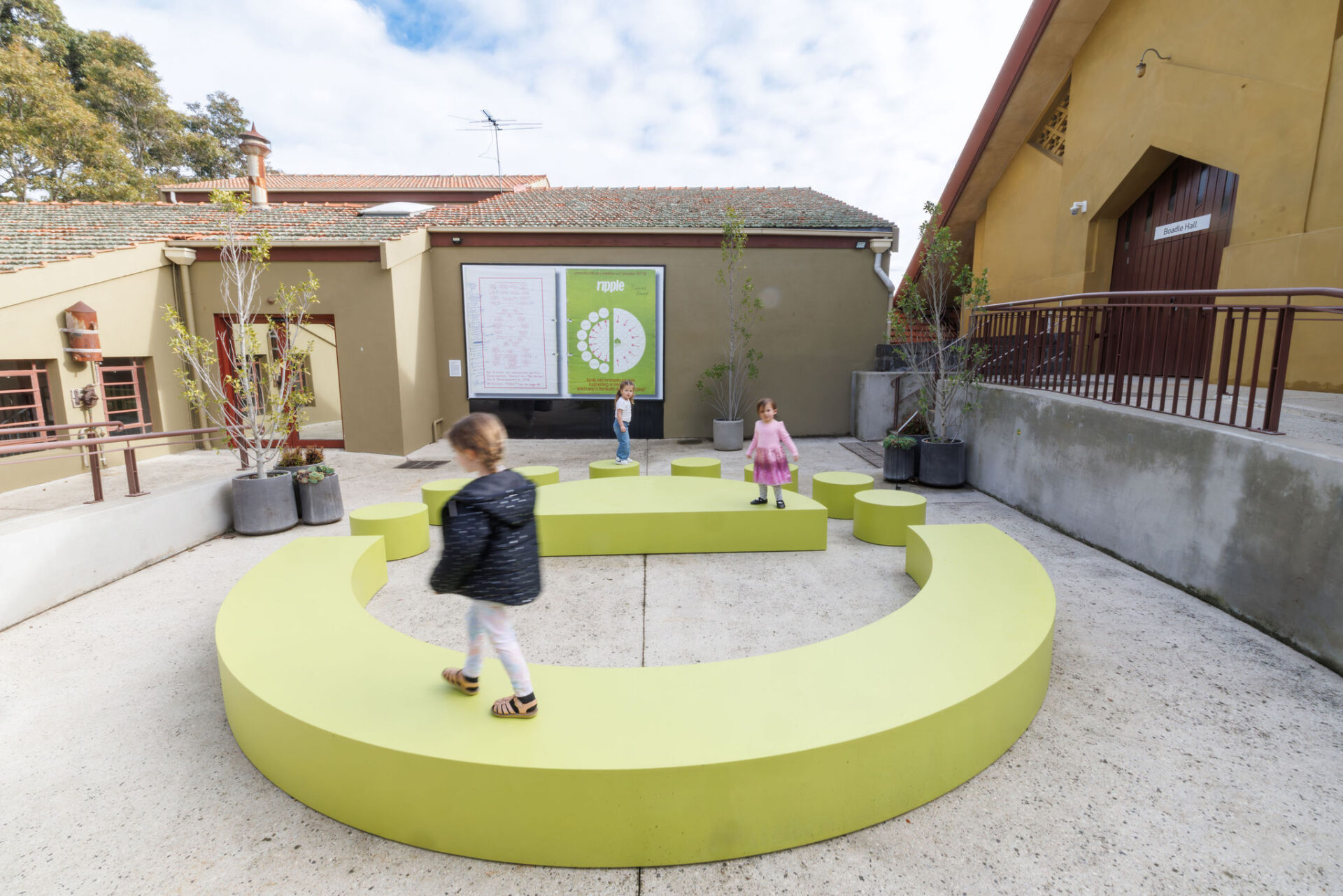
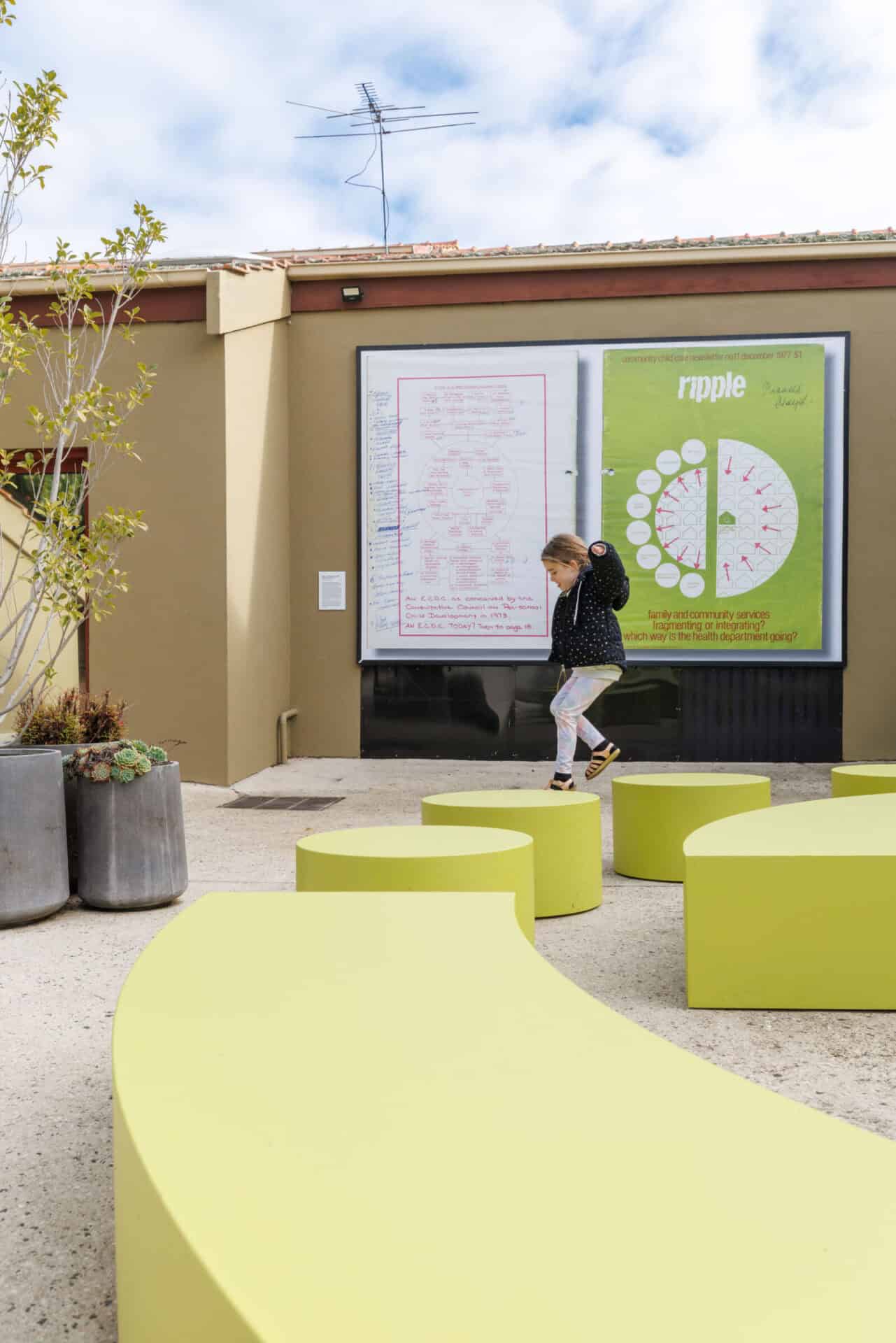
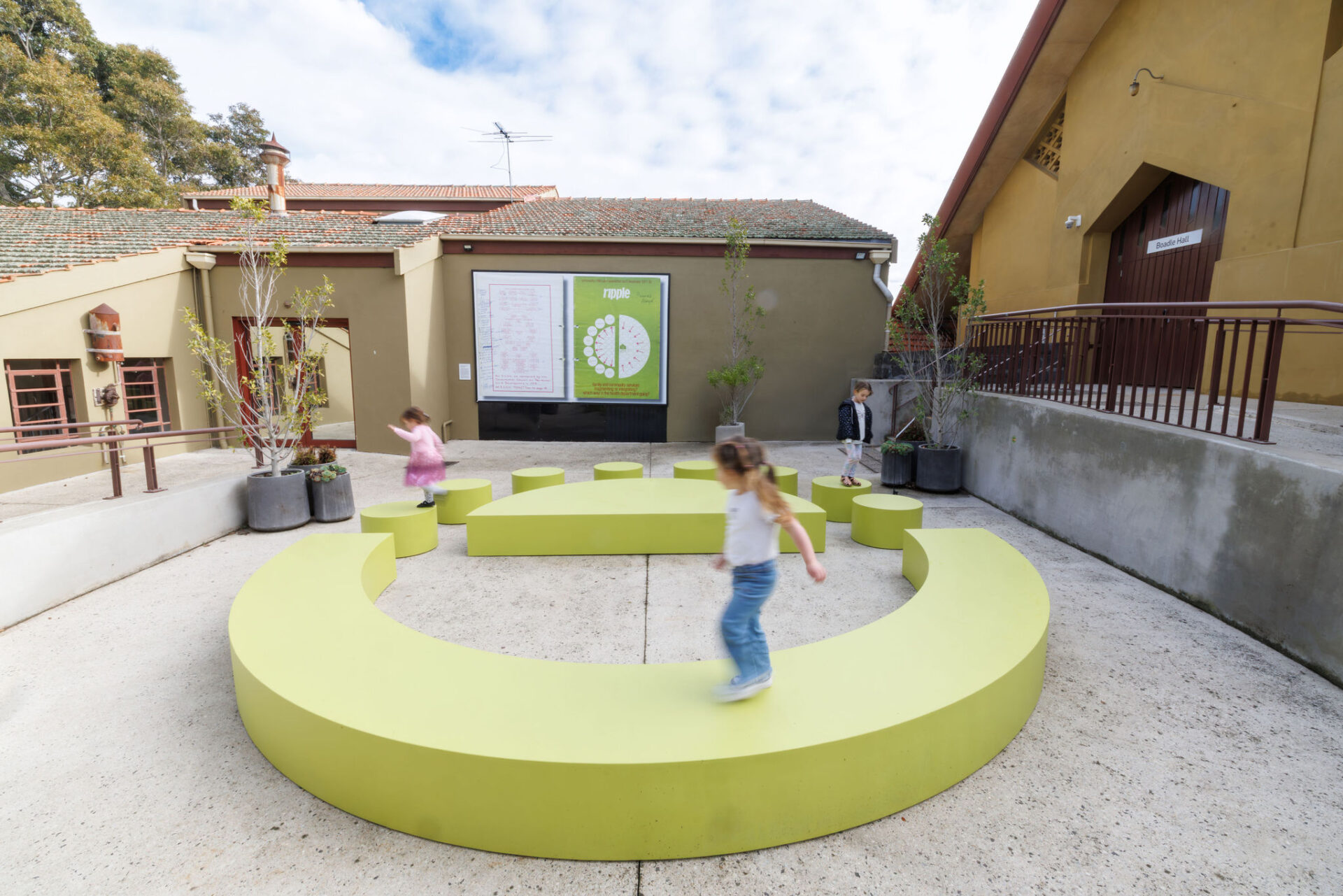
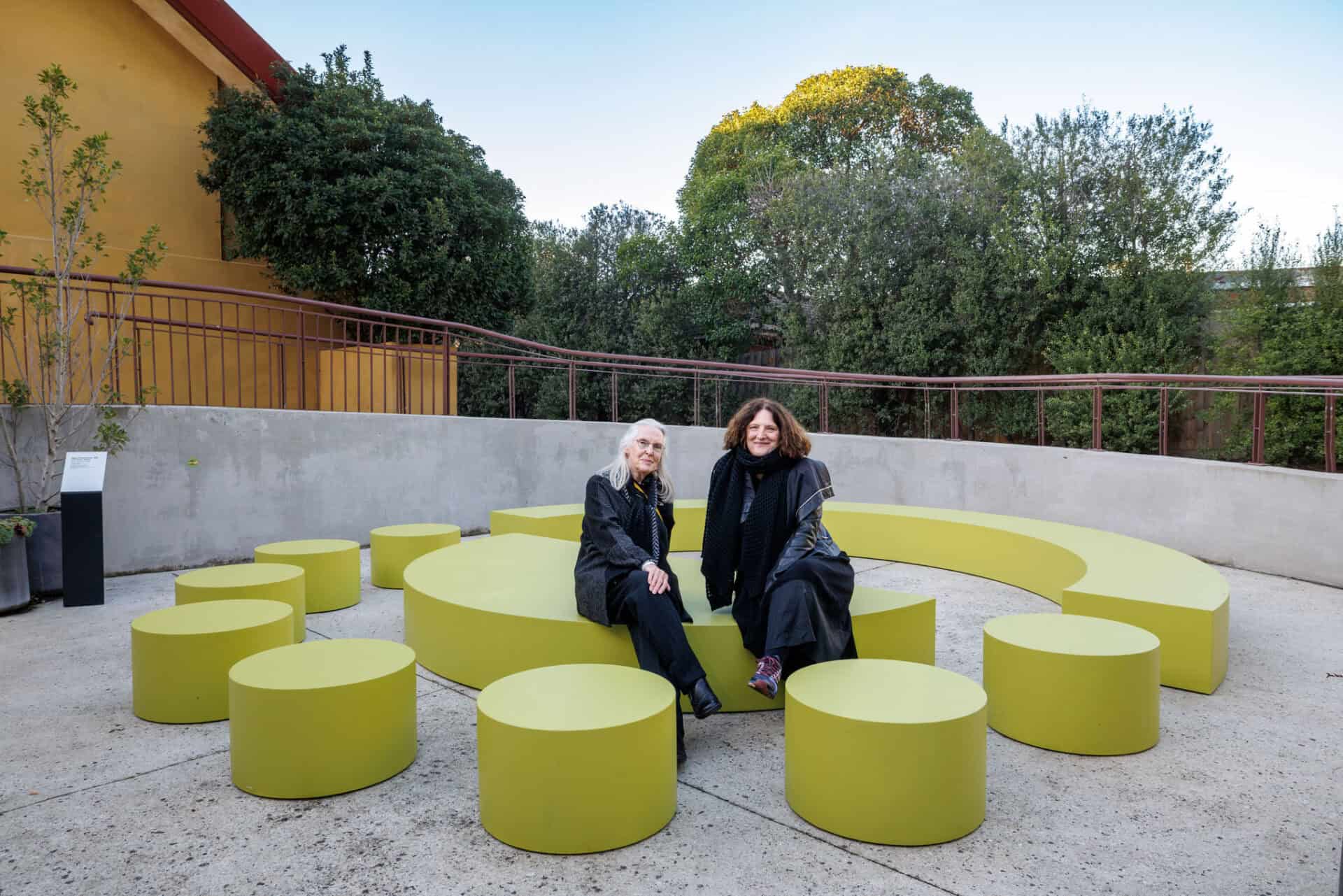
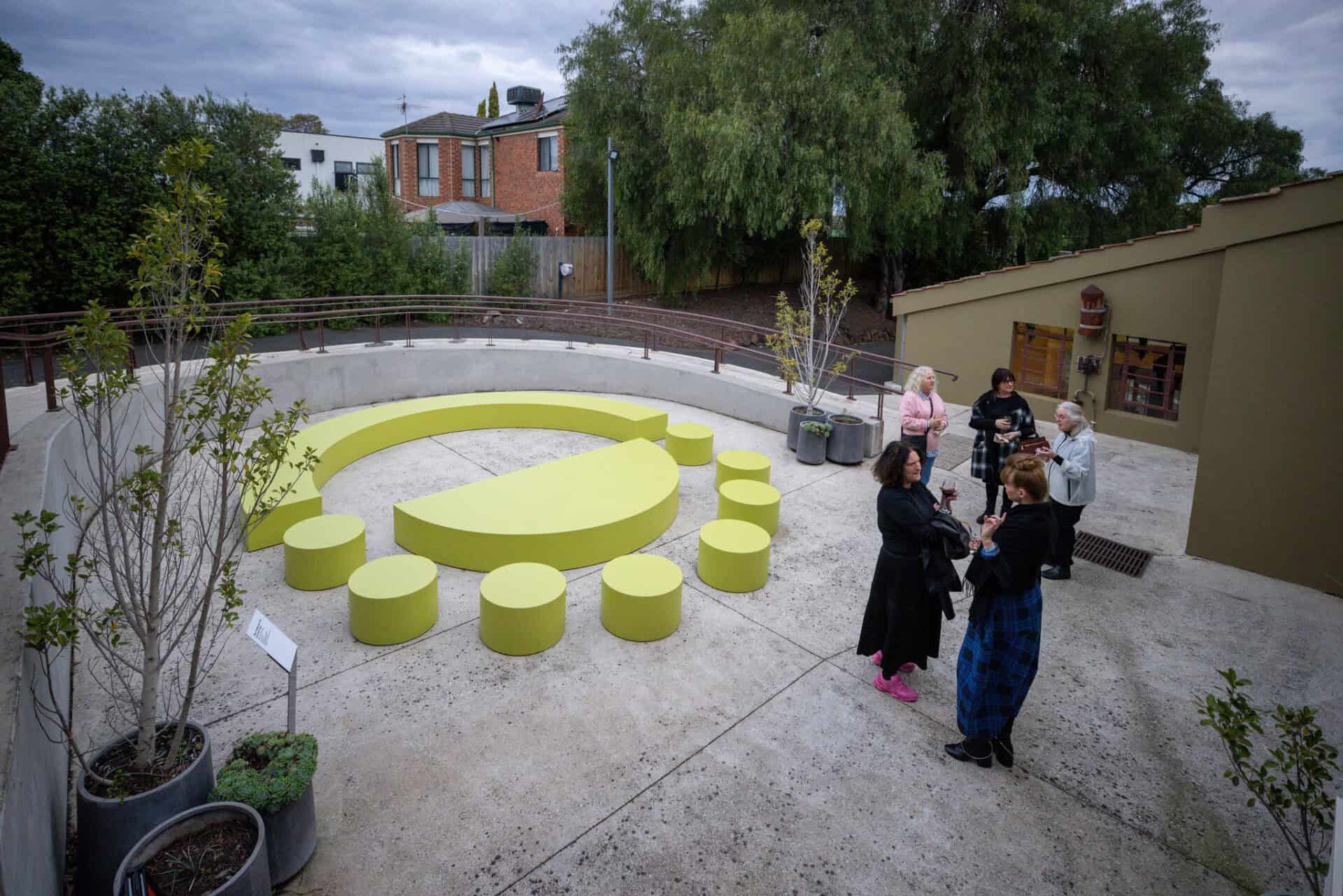
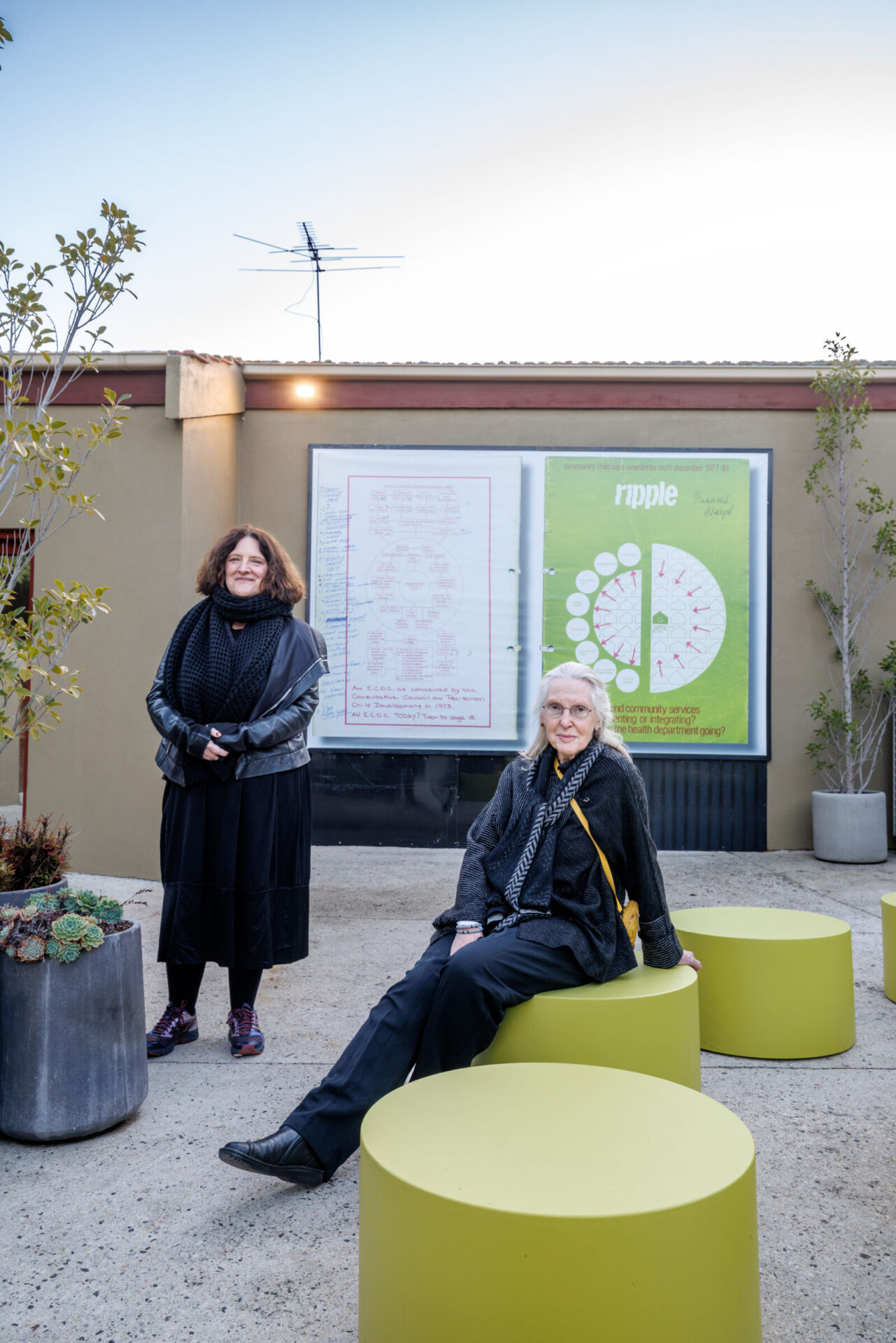
Mary Featherston AM and Emily Floyd, Round Table, 2017/2025. The Playground Project Melbourne (new commission), install view, 2025. Photo Timothy Burgess. Courtesy Mary Featherston AM, Emily Floyd and Incinerator Gallery MVCC.
Mary Featherston AM and Emily Floyd, Round Table, 2017/2025
Painted plywood, modular seating structure
4000 x 4000 mm (total area)
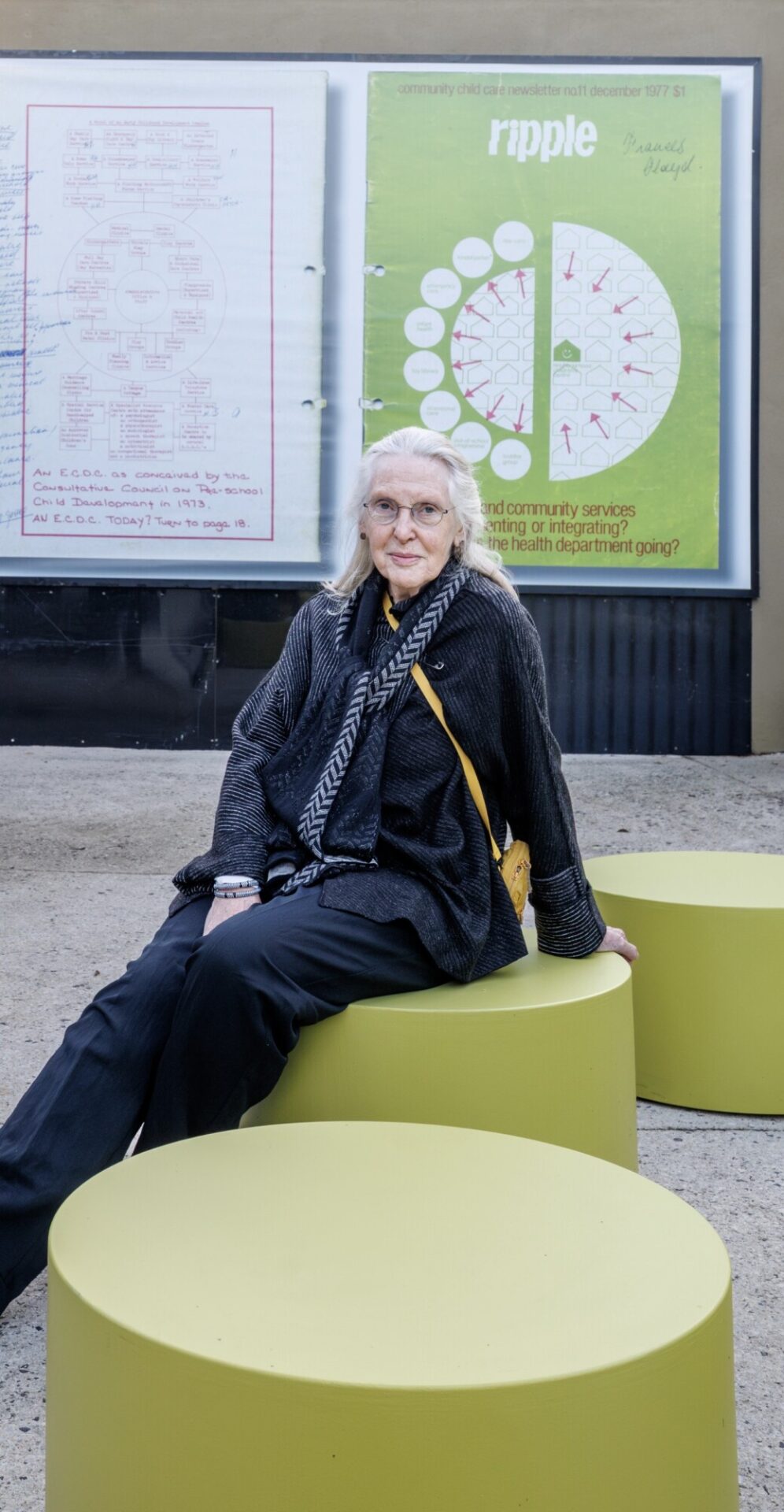
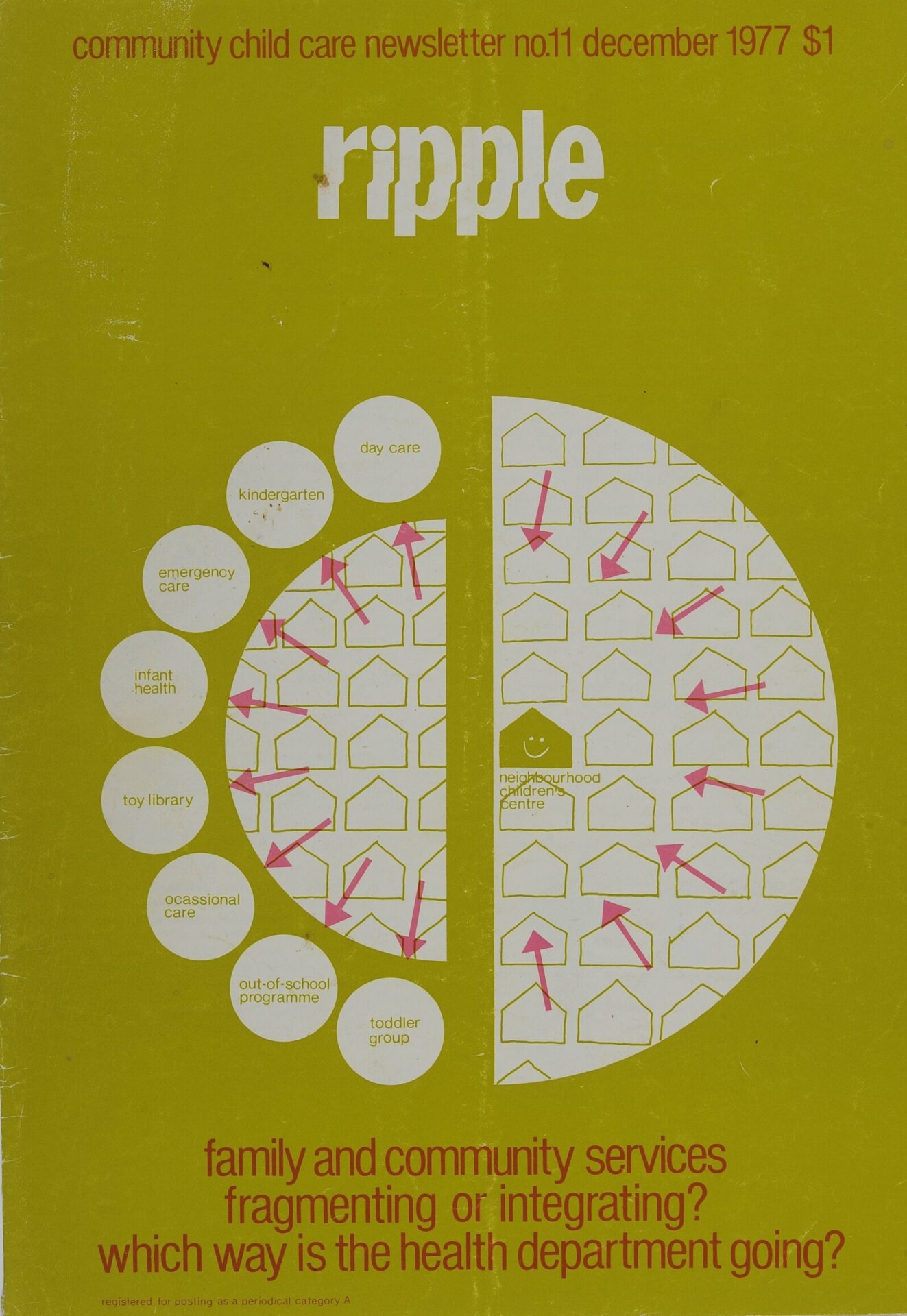
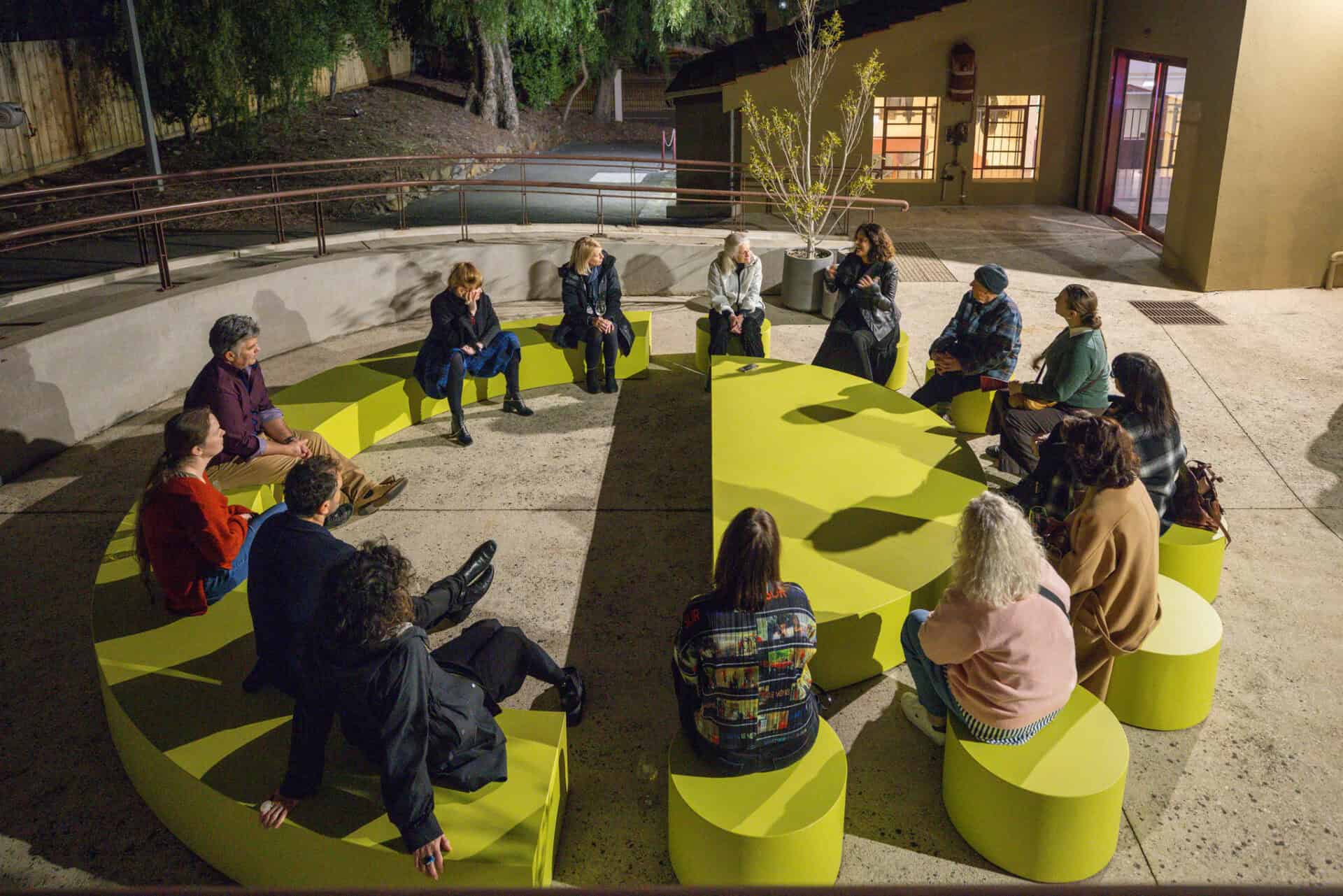
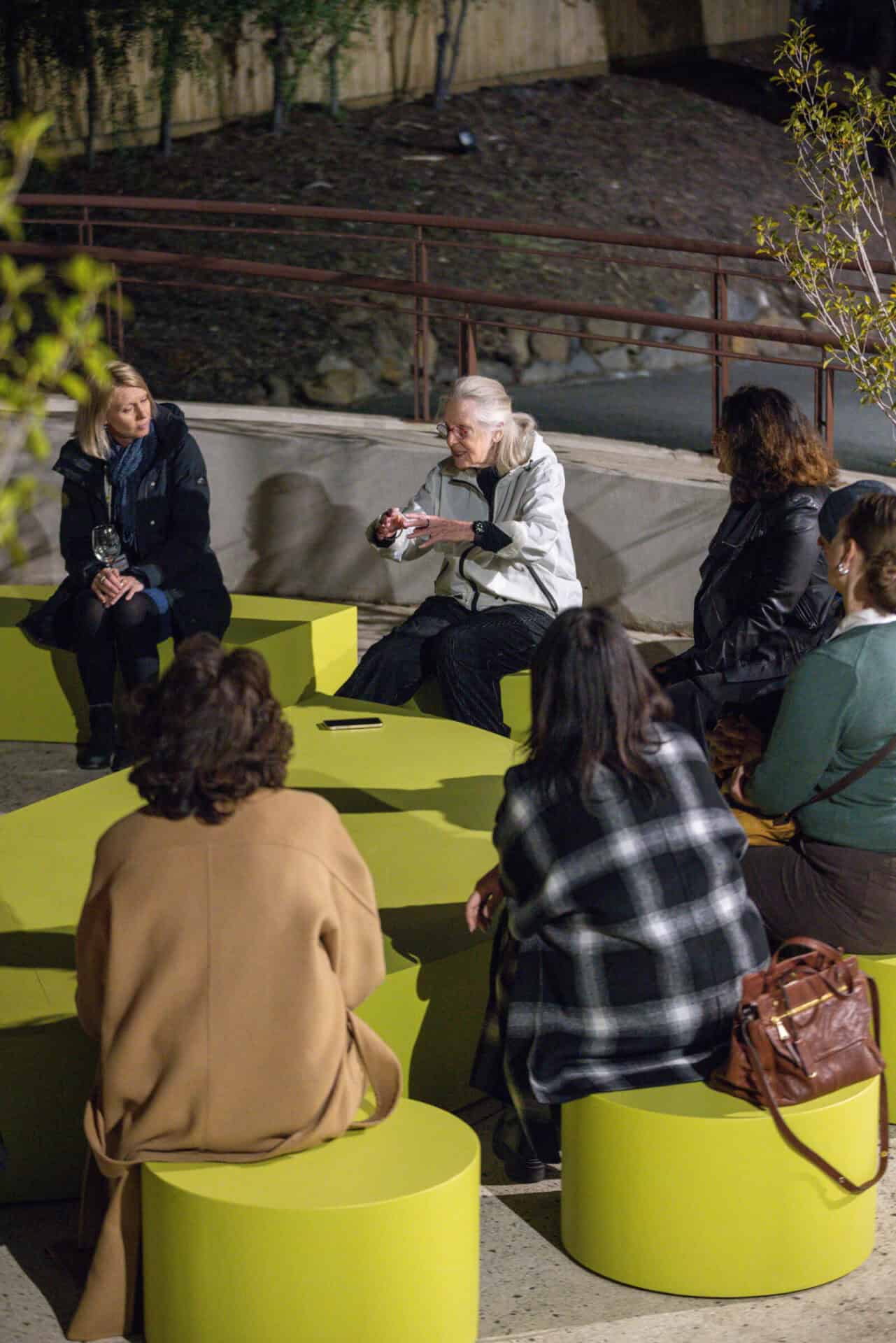
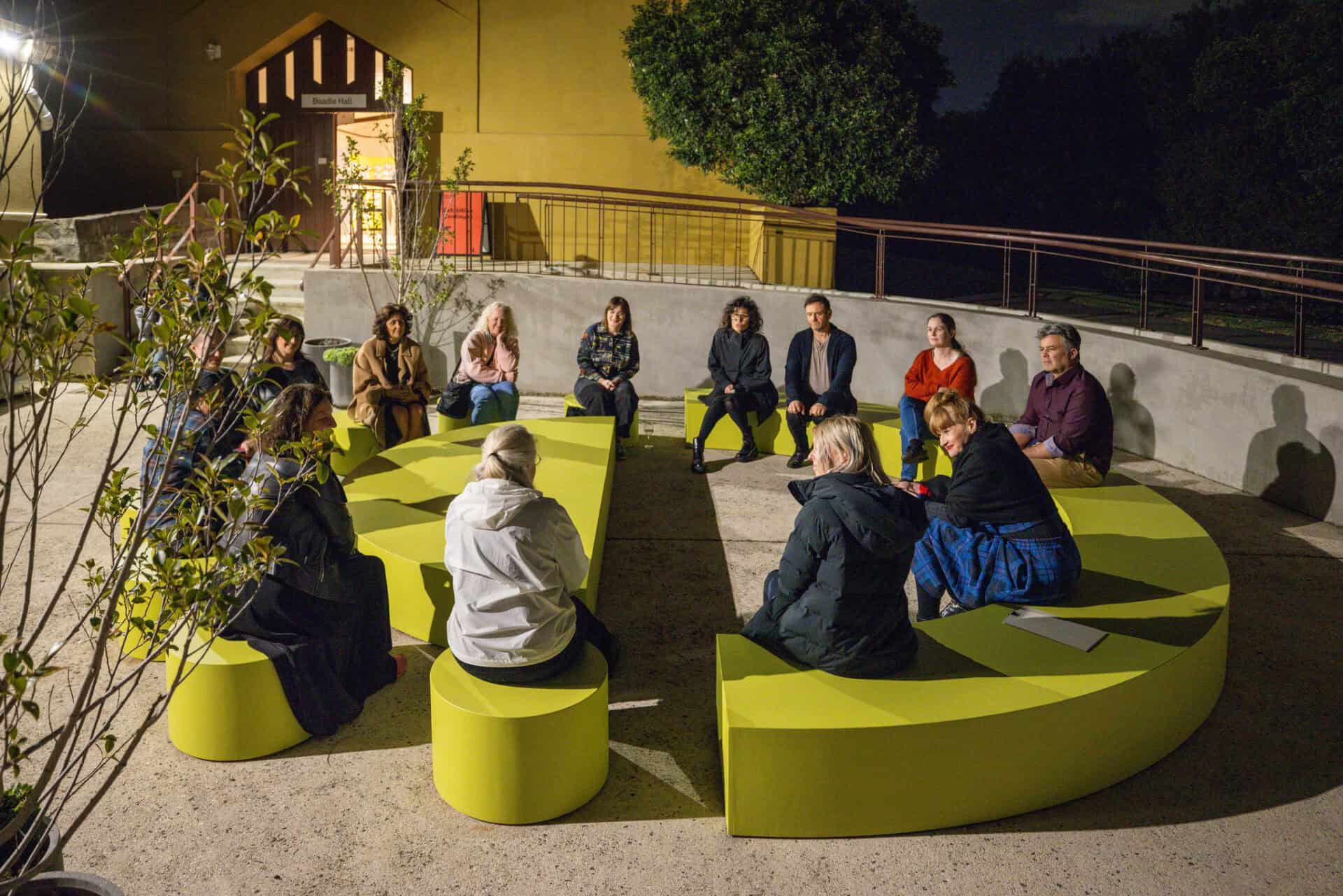
Installed in the public sphere of Incinerator Gallery’s courtyard, Round Table is a collaborative artwork by contemporary artist Emily Floyd and pioneering designer Mary Featherston AM that merges sculpture, pedagogy, and feminist design histories. Conceived as both a conceptual object and functional social space, Round Table takes its form from Featherston’s 1977 cover design for Ripple, the Community Child Care movement’s radical broadsheet, edited by Floyd’s mother, community activist Frances Floyd.
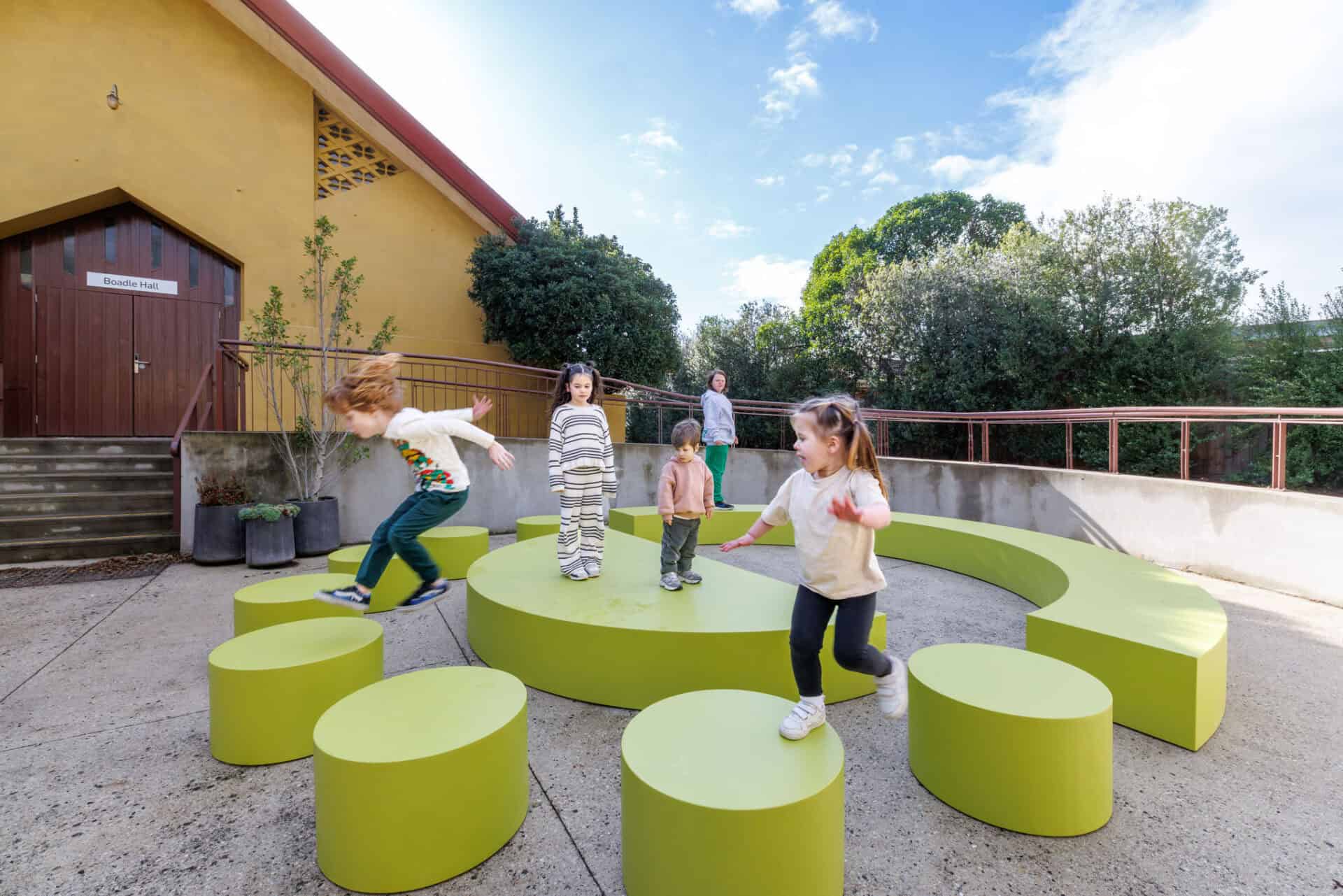
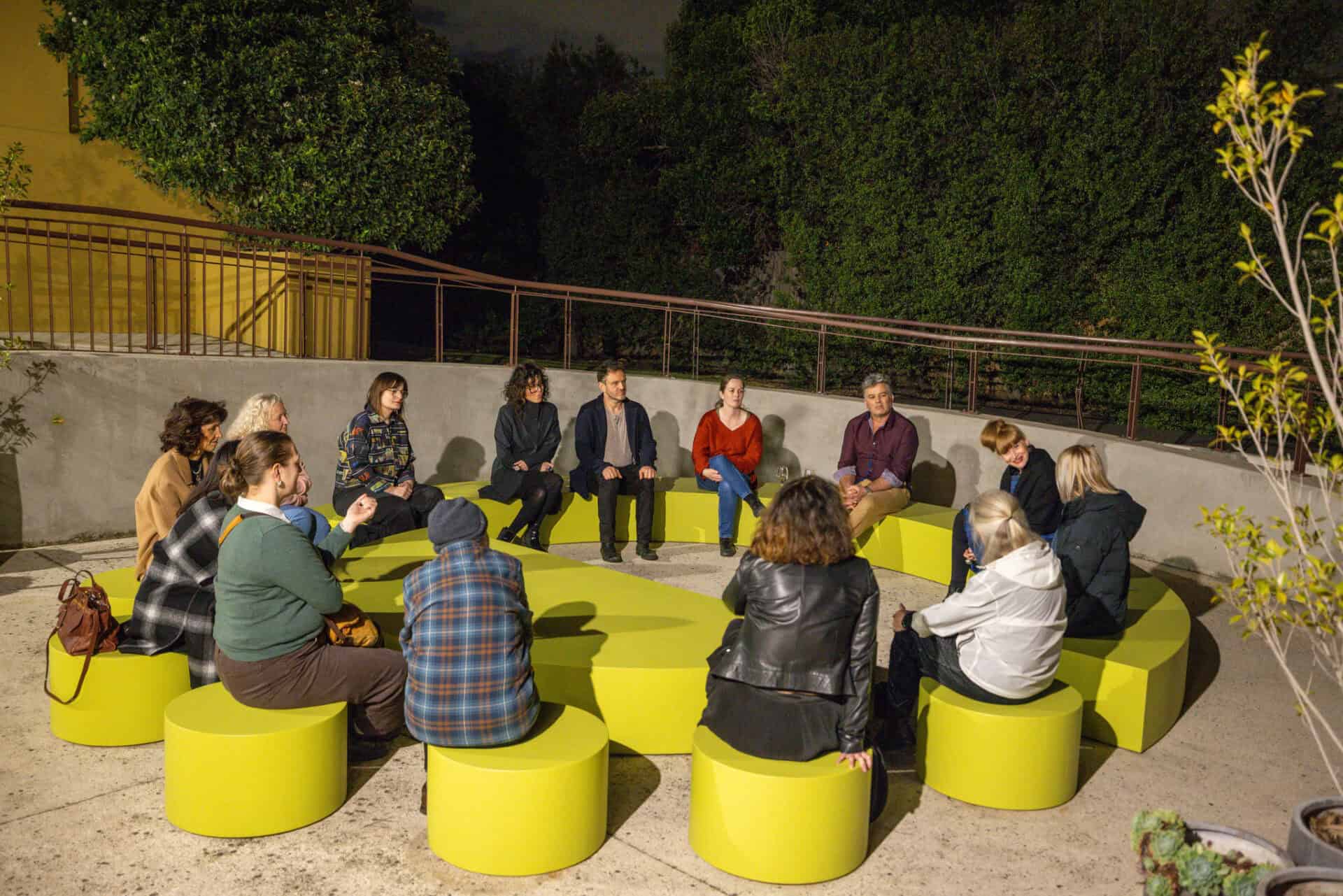
Mary Featherston AM and Emily Floyd, Round Table, 2017/2025. The Playground Project Melbourne , install view, 2025. Photo Timothy Burgess. Courtesy Mary Featherston AM, Emily Floyd and Incinerator Gallery MVCC.
Originally created for ACCA’s historic exhibition, Unfinished Business: Perspectives on Art and Feminism (2017), Round Table was activated as a public gathering site—bookable by community groups for meetings and discussions. Scaled for both play and dialogue, the work operates as a living structure: a physical platform for shared learning, civic engagement, and feminist practice.
During gallery hours, community groups are encouraged to reserve and use Round Table for gatherings. The work is exhibited outdoors for the first time at Incinerator Gallery.
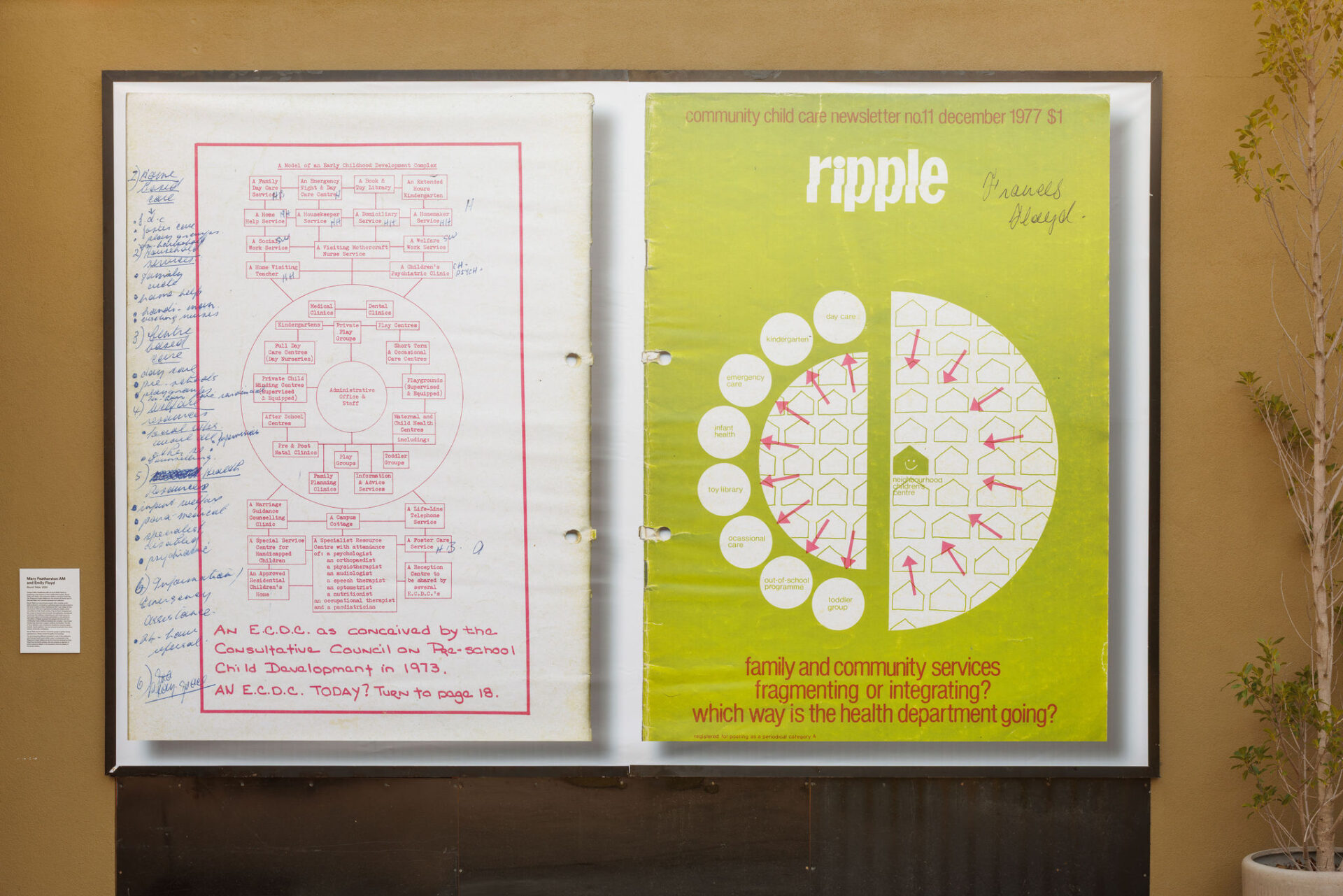
Mary Featherston AM, Ripple magazine cover, 1977 (with handwritten notes by Frances Floyd). Billboard produced for The Playground Project Melbourne, install view, 2025. Photo Timothy Burgess. Courtesy Mary Featherston AM, Emily Floyd and Incinerator Gallery MVCC.
Accompanied by a nearby billboard print of the original Ripple motif, the installation resonates with the spirit of grassroots activism and public education that informed both the magazine and Featherston’s design ethos. Situated here, adjacent to the architectural legacy of Marion Mahony Griffin (1871-1961) and her investment in Rudolph Steiner’s (1861-1925) holistic education principles, Round Table offers a generative site for intergenerational conversation—linking design, care, and collective action across time.
Round Table is accompanied with additional new and existing works by Emily Floyd.
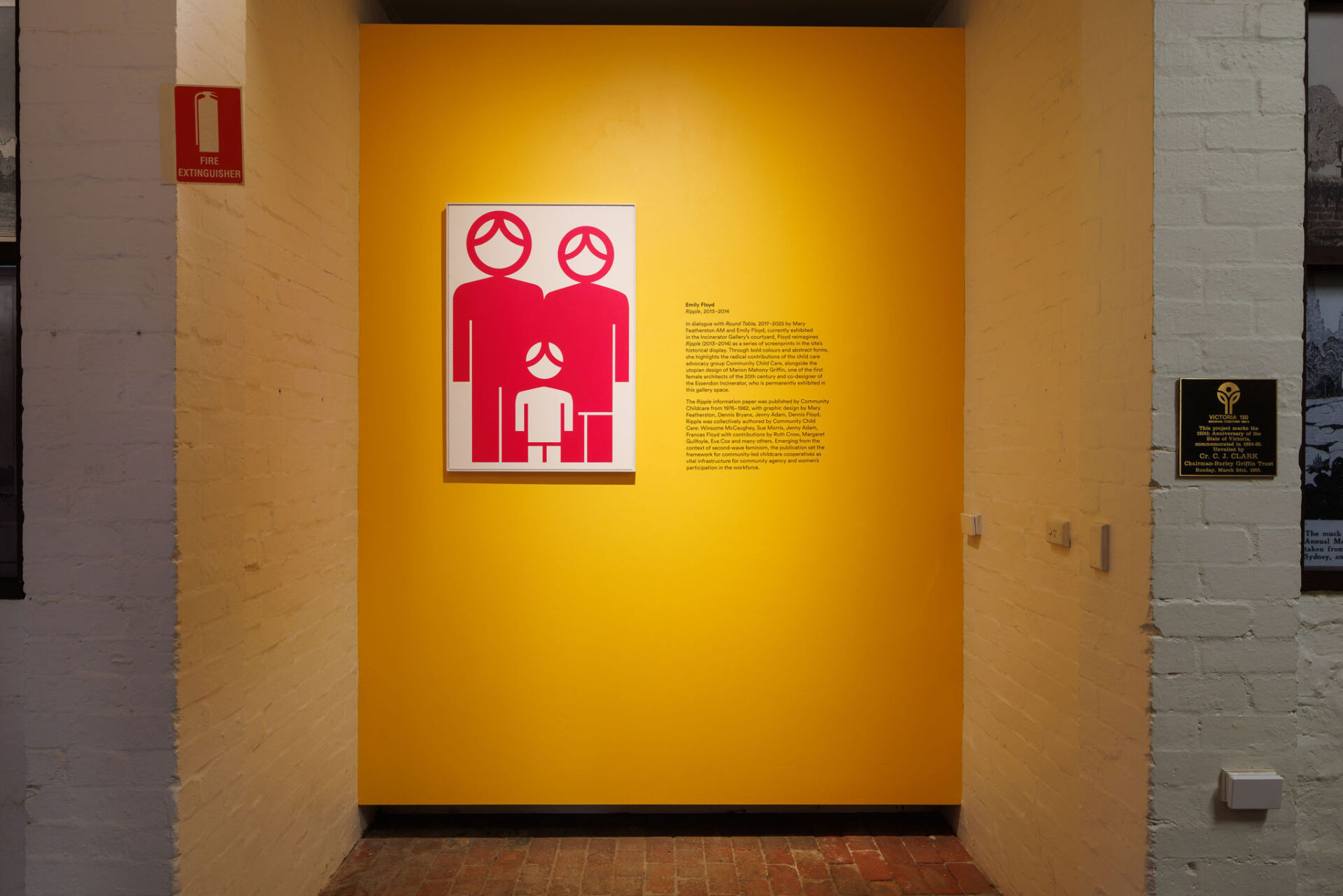
Emily Floyd, Ripple series, 2013–2014
Screenprints, ink on paper
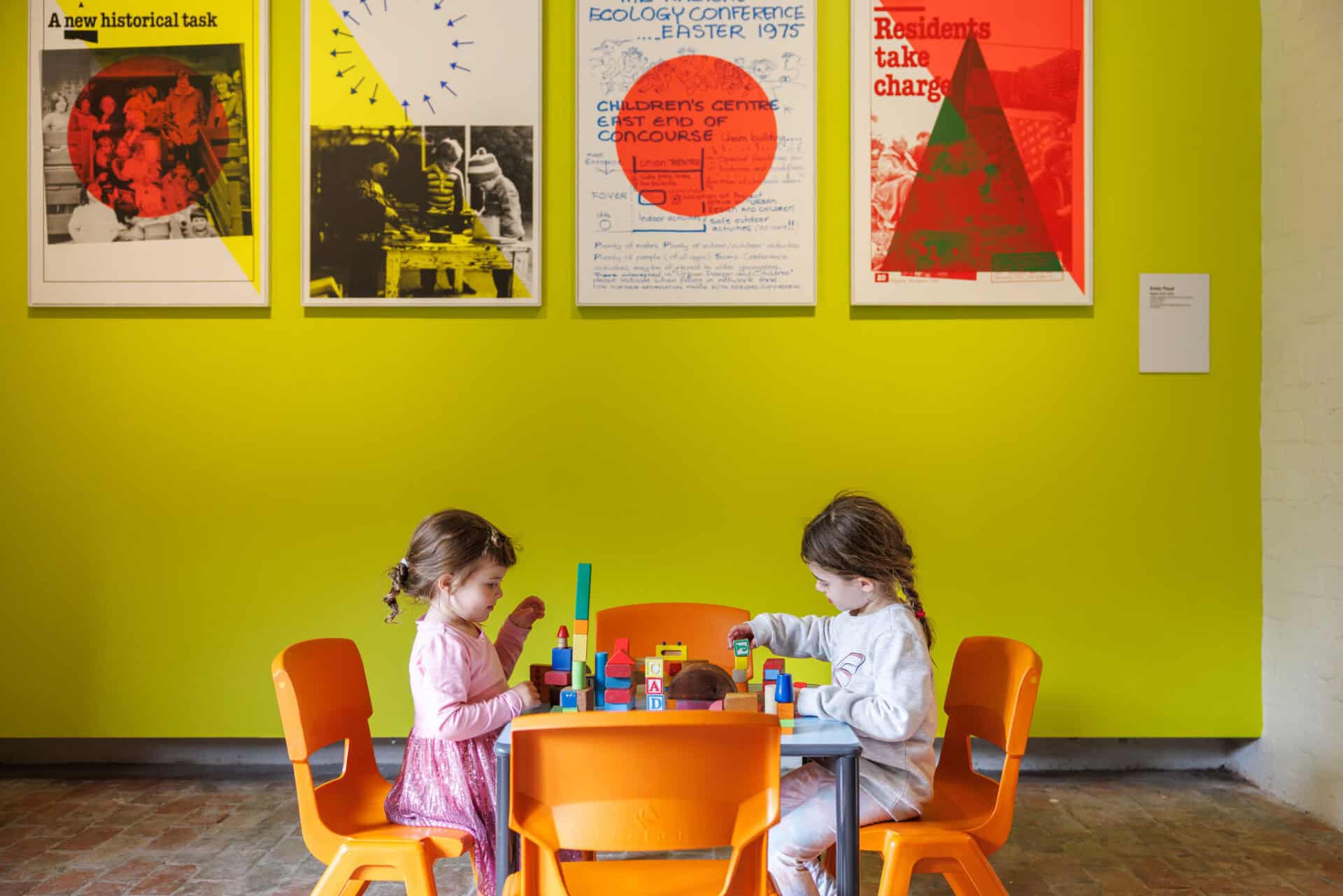
Presented alongside the visionary architectural designs and pedagogical ideals of Marion Mahony Griffin (1871-1961), Emily Floyd’s Ripple series engages in a parallel excavation of feminist and community-driven modernism. This selection of screenprints reactivates the archive of Ripple—a radical broadsheet published by the Community Child Care movement in Melbourne between 1976 and 1982. Edited by the artist’s mother Frances Floyd, featuring designs by Mary Featherston, and collaboratively written by a network of feminist thinkers and activists, Ripple advocated for accessible childcare and collective social reform, drawing inspiration from early socialist ideals and highlighting a history of unacknowledged feminism.
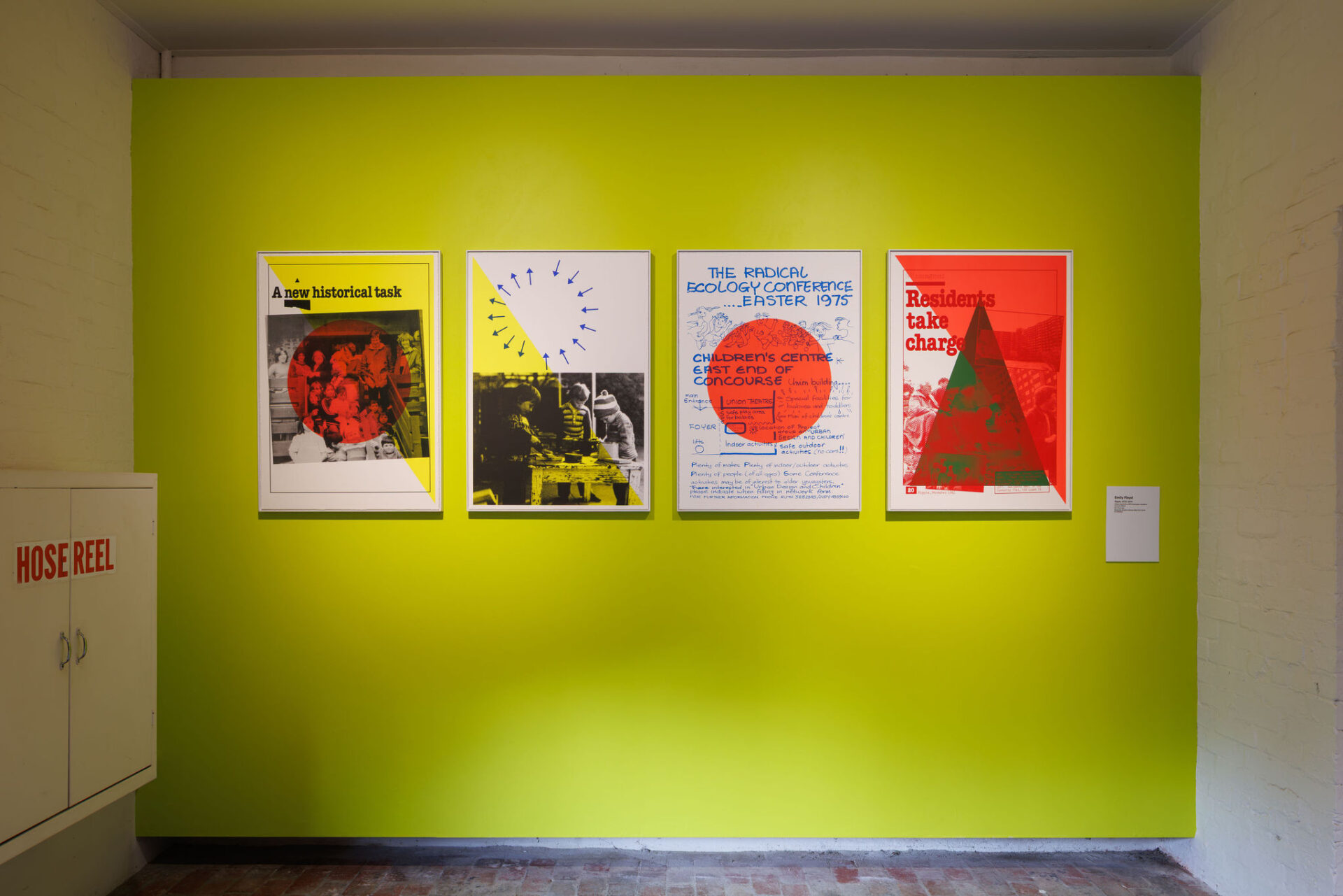
Emily Floyd, Ripple, 2013-2014. Screenprints, ink on paper. The Playground Project Melbourne (new commission), install view, 2025. Photo Timothy Burgess. Courtesy Emily Floyd and Incinerator Gallery MVCC.
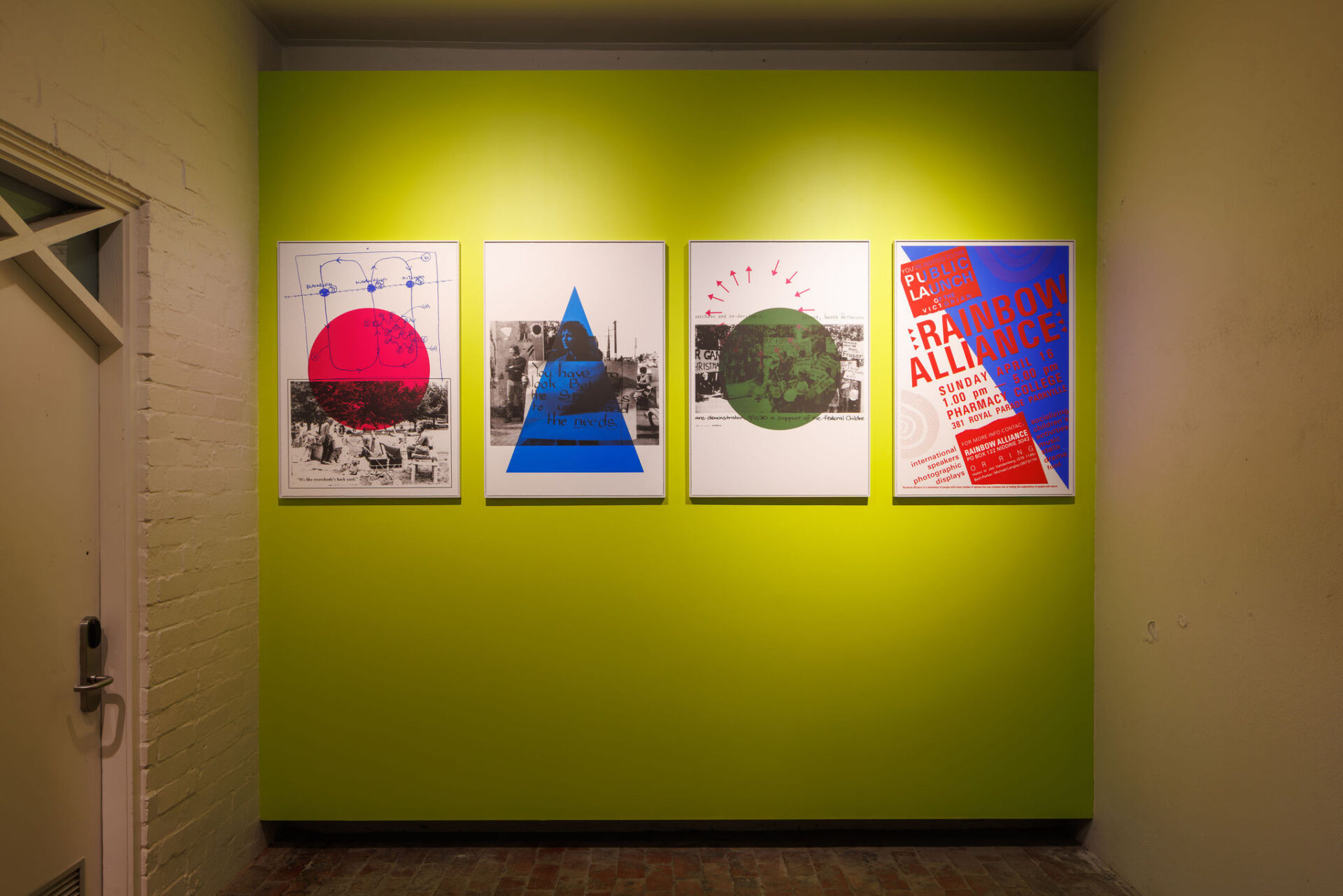
Emily Floyd, Ripple, 2013-2014. Screenprints, ink on paper. The Playground Project Melbourne (new commission), install view, 2025. Photo Timothy Burgess. Courtesy Emily Floyd and Incinerator Gallery MVCC.
Floyd, working with materials inherited from her mother, overlays pages from Ripple and affiliated printed ephemera with vibrant, geometric compositions in fluorescent hues. Her use of concentric circles—echoing Featherston’s original ripple motif—visually amplifies the publication’s grassroots ethos: how small acts of care and solidarity might radiate into broader social transformation.
Installed within the historical context of the Incinerator Gallery—co-designed by Mahony Griffin, a pioneer of modernist architecture and a proponent of Rudolf Steiner’s (1861-1925) educational philosophy—Floyd’s work offers a feminist counter-narrative to dominant histories of modernism. These prints ripple through time, making visible a generative lineage of women’s labour, activism, and design that continues to inform future generations.


Emily Floyd, Recreation on Moonee Ponds Creek, 2025
Digital print on MDF
Created for the southern hemisphere debut of The Playground Project at Incinerator Gallery, Recreation on Moonee Ponds Creek draws on Emily Floyd’s rich familial and feminist lineage. Reimagining a photograph from her mother Frances Floyd’s personal archive, the work reflects on the textures of childhood, care, and suburban life in Melbourne’s north-west during the late 20th Century.
Now housed within Victoria University’s Ruth & Maurie Crow Collection, Frances Floyd’s archive captures the spirit of grassroots advocacy in Melbourne’s west—documenting child-centred practices, urban playspaces, neighbourhoods, and the social infrastructure that supports everyday life. In transforming this image into a large-scale print, Emily Floyd celebrates the radical potential of the ordinary: the playground as a site of imagination, social learning, and political possibility.
Set against the backdrop of The Playground Project’s international celebration of play, Floyd’s work connects local histories with global conversations—foregrounding community, memory, and the feminist politics of public space.
Special Event
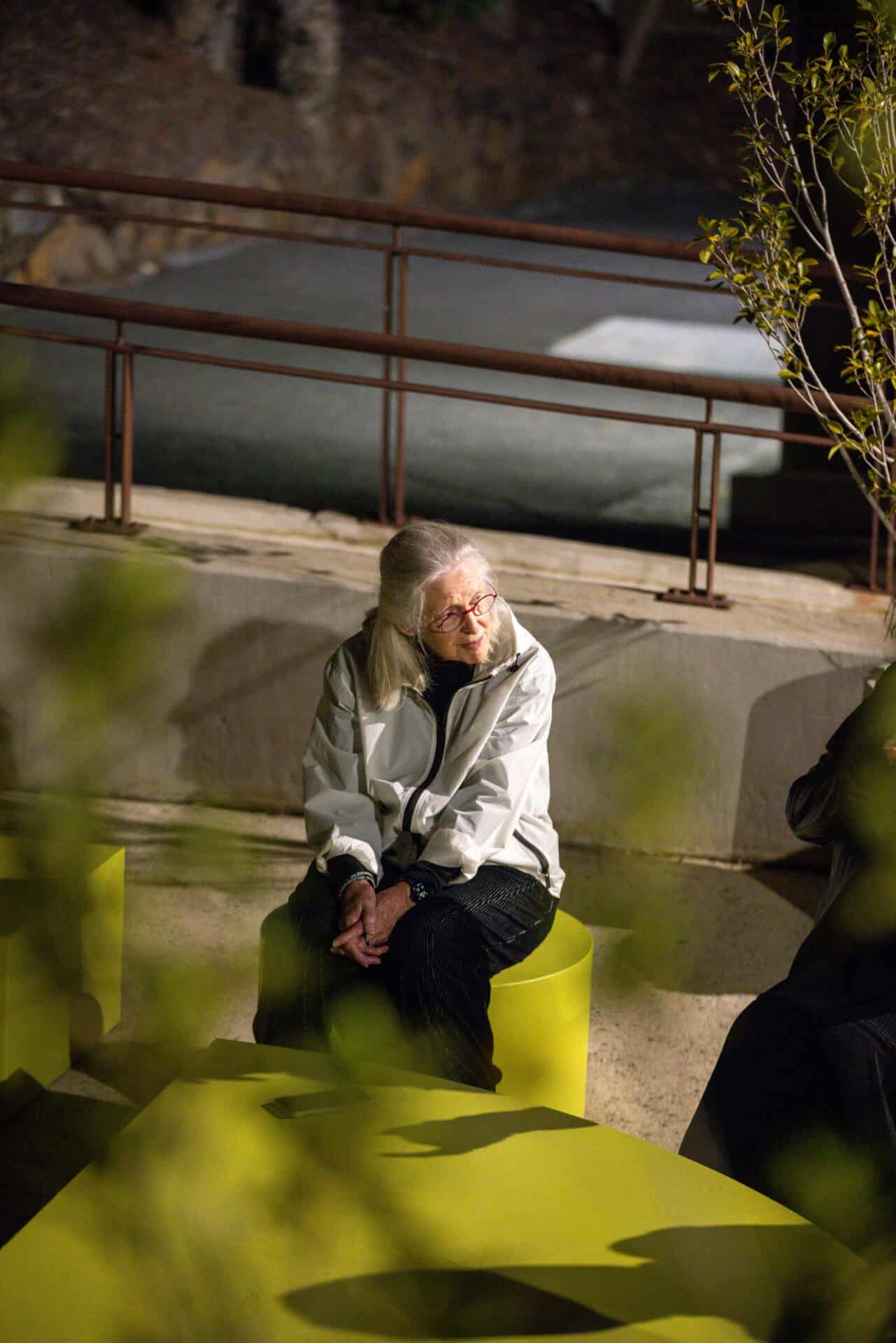
On 25 September 2025, as part of Incinerator Gallery’s Thursday Late event series and a highlight of the exhibition’s activation program, Mary Featherston AM and Emily Floyd hosted a candid discussion at Round Table about their ongoing work and the role of women in childcare and childhood.
CreditS:
Concept and Design
Mary Featherston AM and Emily Floyd
Fabrication
Stephen Bellosguardo and Dominic Reynolds
Project Management
MJ Flamiano, Public Art Officer, Incinerator Gallery MVCC
Jake Treacy, Curator, Incinerator Gallery MVCC
Jade Niklai, Head of Visual and Public Art, Incinerator Gallery MVCC