








Next – Project
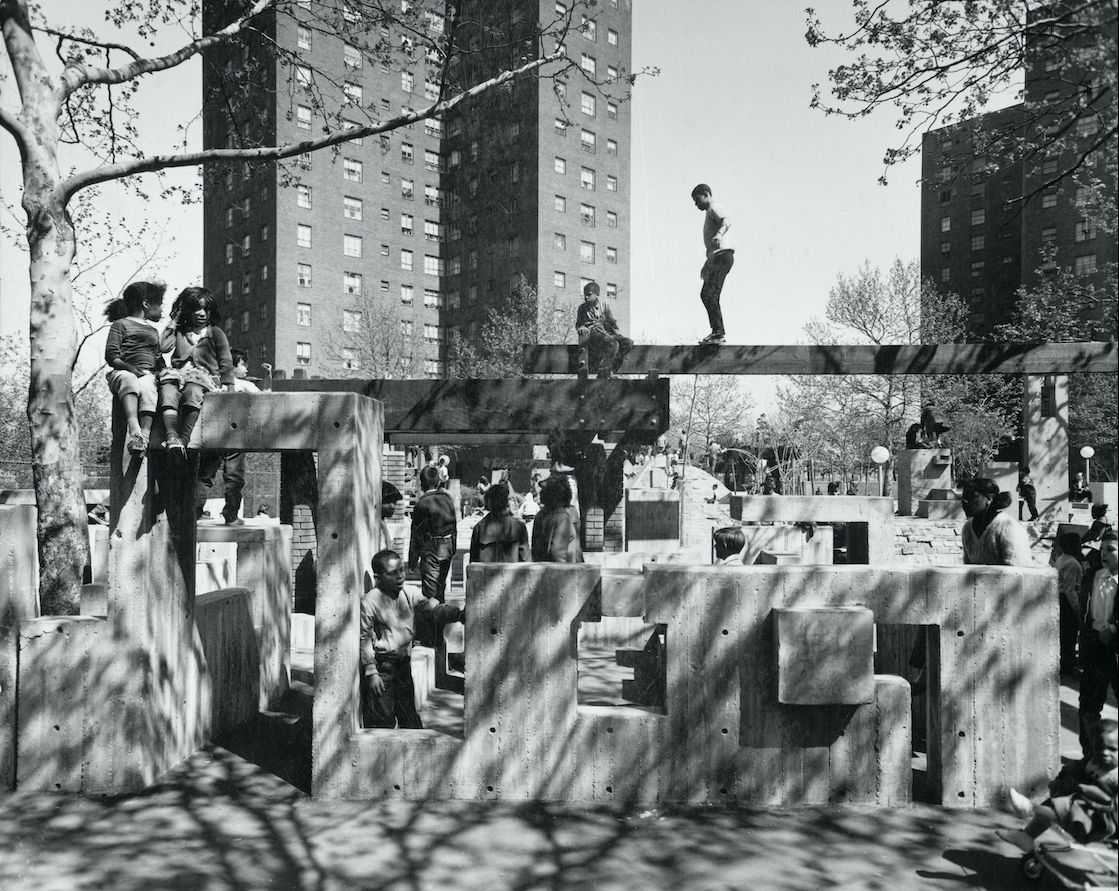
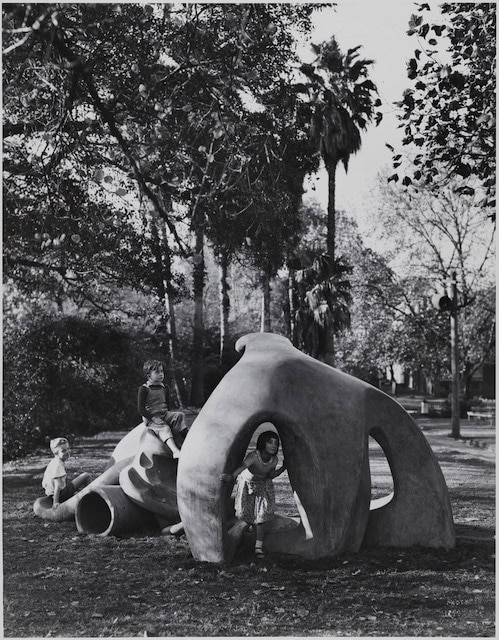
M. Paul Friedberg, Riis Park Plaza, Jacob Riis Houses, New York City, 1965. Photo anon. Modern Records Centre and the Lady Allen of Hurtwood papers. University of Warwick, Coventry UK. Courtesy The Playground Project.
Curated by Gabriela Burkhalter
28 June – 12 October 2025
Incinerator Gallery
180 Holmes Road
Aberfeldie, Melbourne
Victoria 3040, Australia
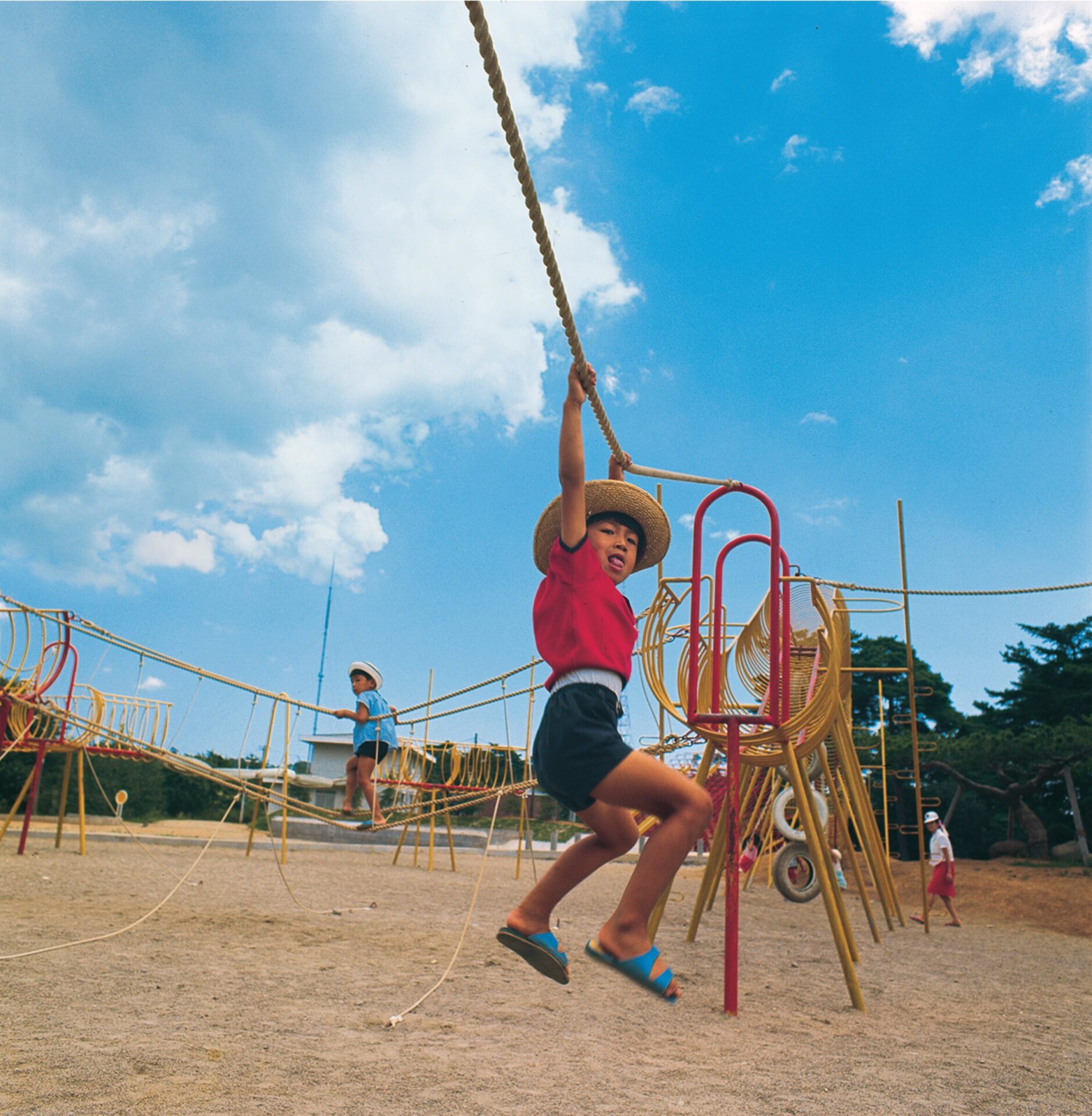
Mitsuru Senda, Giant Path Play Structure, Mukoyama Children’s Park Sendai, Miyagi Prefecture, 1969. Photo Yoshio Shiratori. Courtesy Environment Design Institute, Tokyo & The Playground Project.
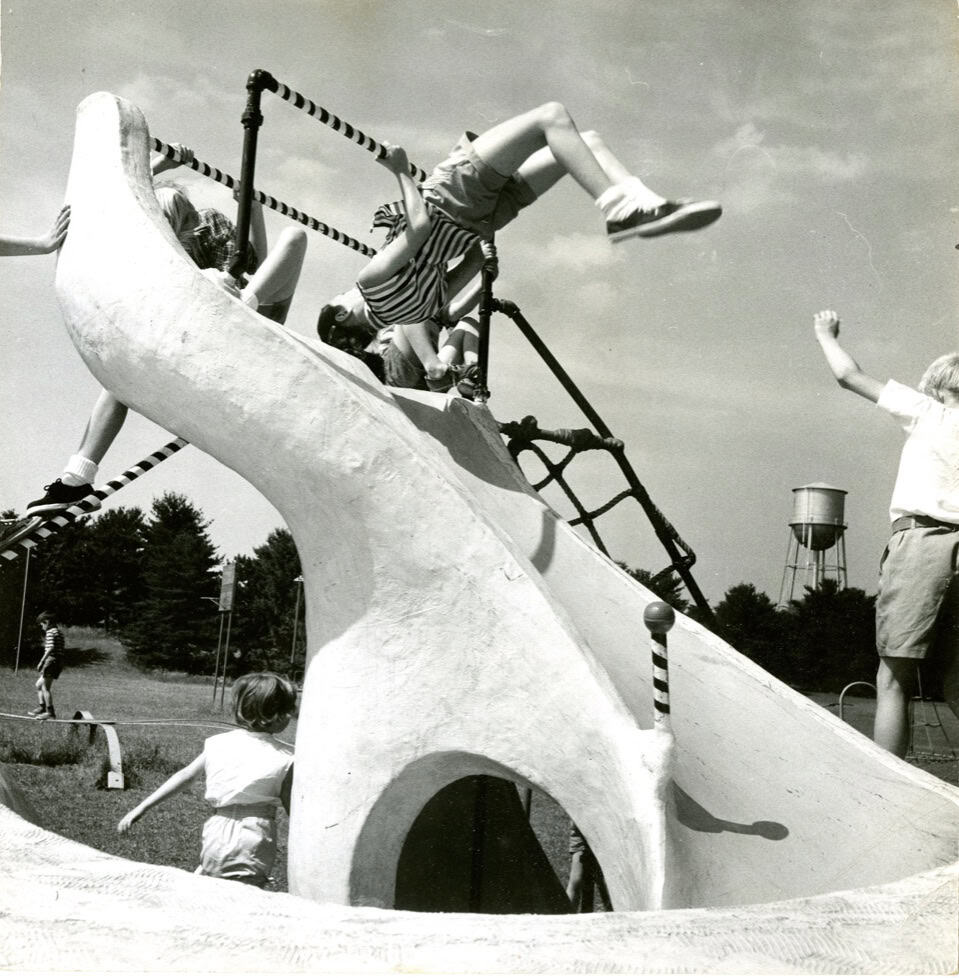
Joseph Brown, Whale, c.1955. Photo anon. Courtesy The Playground Project.
Introduction
We all know what a playground is. But who knows its history?
Often overlooked by historians and social commentators, the playground is a barometer of society, its debates, opportunities and challenges. Despite its modest size, playgrounds find themselves at the crossroads of ideas about education and childhood, creativity and control, planning and public space, art and architecture.
The Playground Project Melbourne presents unique playgrounds of the last 150 years based on the research and living archive of exhibition curator, Gabriela Burkhalter. An international blockbuster exhibition, first commissioned by Kunsthalle Zürich in 2016 with further editions in Europe, UK and America; the presentation at Incinerator Gallery features the work of modernist and contemporary artists and designers spearheading the discourse and practice of playground design.
Unlike any other exhibition, young visitors are invited to climb, crawl, fall and imagine their way through a whimsical and colourful exhibition display and interact with the magical playgrounds that sit at the heart of this project and takeover at Incinerator Gallery’s indoor and outdoor spaces.
An ambitious program of educational and public events foster community engagement, art and design exploration during the exhibition, and inspire children, their families and carers to live, learn and play creatively in parks, cities and suburbs.

Yvan Pestalozzi, The Lozziwurm, 1972. Photo: Heidi-Gantner, 1975. Courtesy The Playground Project.
A Brief History
The last 150 years have witnessed four phases in the art and development of playground design.
The first, dating from 1880, saw social reformers take children off the streets and onto playgrounds. The second, going strong during the 1930s, nurtured the belief – especially in Scandinavia – that children play best in a nature setting. From 1968 onwards during the third phase, local community groups and creative collectives began to build their own playgrounds fuelled by a sense of self-empowerment and the proliferation of self-help books.
The fourth phase, launched by the economic challenges and global reforms of the 1980s, heralded the decline of utopian thought in art and design, and the state’s role as commissioner and caretaker of playgrounds in urban spaces. This crisis in urban planning and playground design continues even today to challenge communities across many cultures, languages, social systems, economic and political realities worldwide.
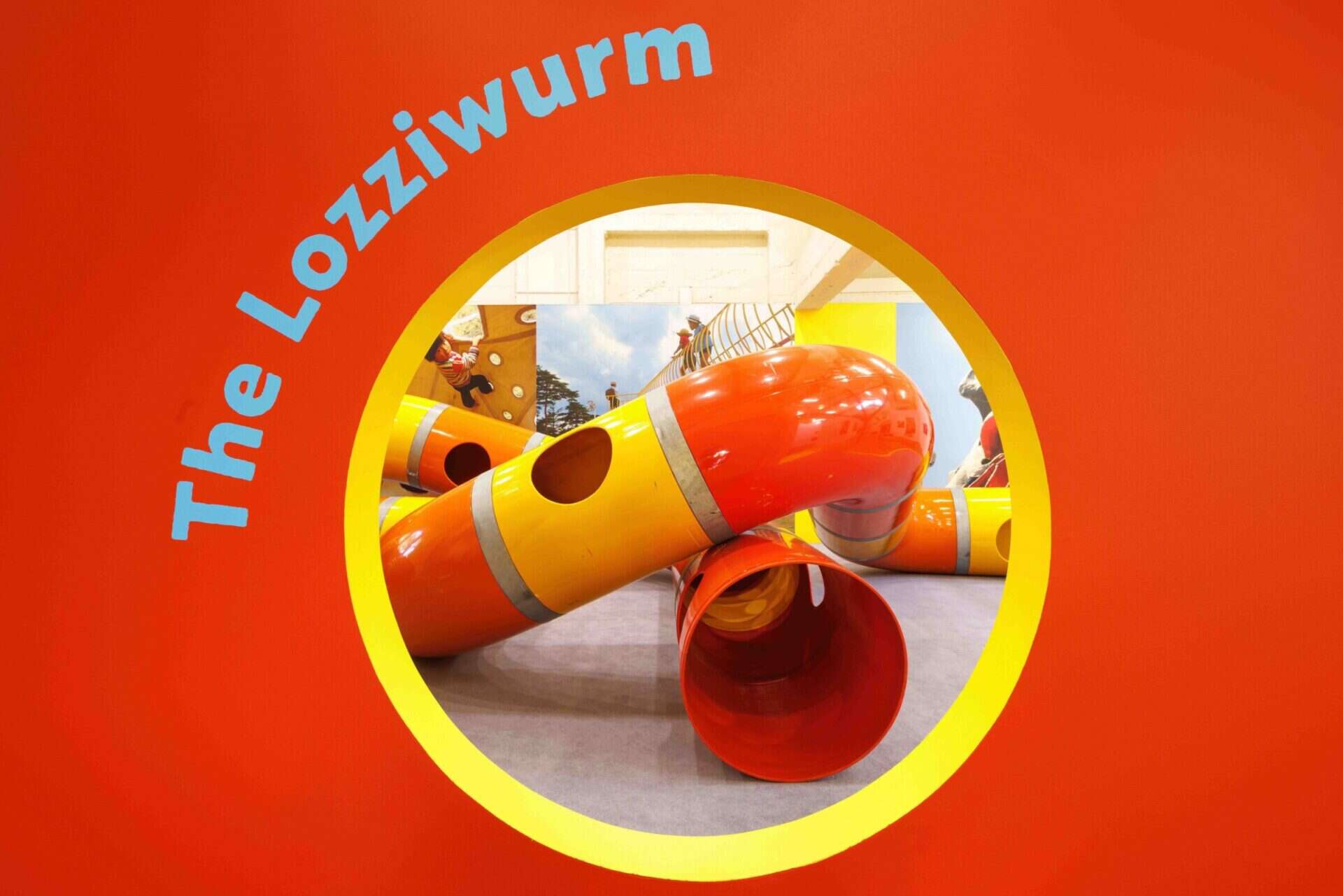
The Lozziwurm
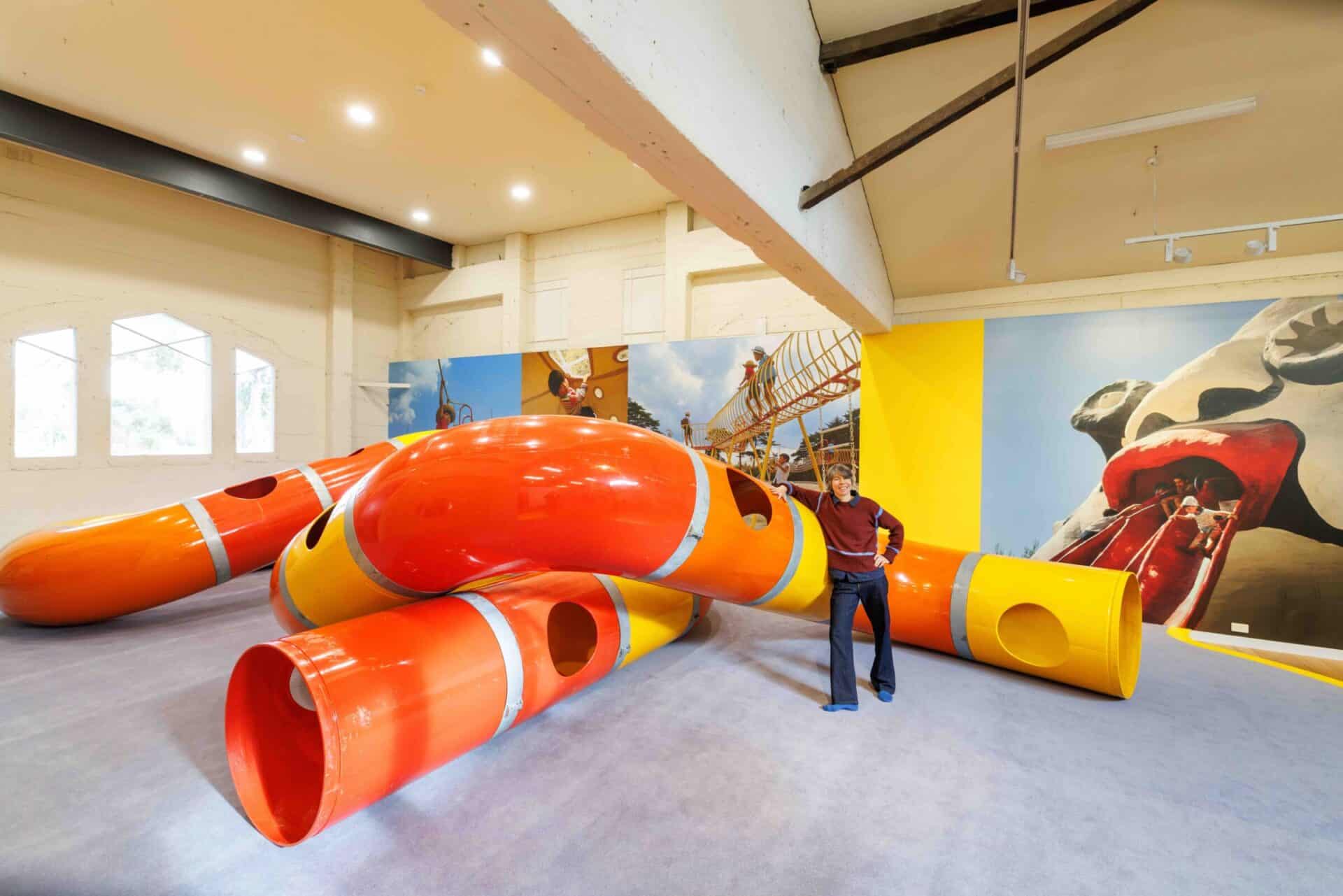
The Lozziwurm (1972/2016) by Swiss cabinetmaker-turned-artist-and-designer, Yvan Pestalozzi (1937-2004) sits at the heart of The Playground Project Melbourne and is widely considered an exemplar of Play Sculpture design.
The first abstract Play Sculptures appeared in Sweden, Holland and Denmark in the 1940s. Presented by artists and designers, often outdoors with limited space; kids were invited to kinetically engage with unique works of art. Informed by Maria Montessori and Rudolf Steiner’s pedagogy of ‘free play’, these site-specific installations were usually made from organic matter (sand, wood, water and stone). On occasion, more durable industrial materials (metal, concrete and fibreglass) were applied and since the 1960s, plastic offers the best lightweight and affordable solution for bright bold designs.
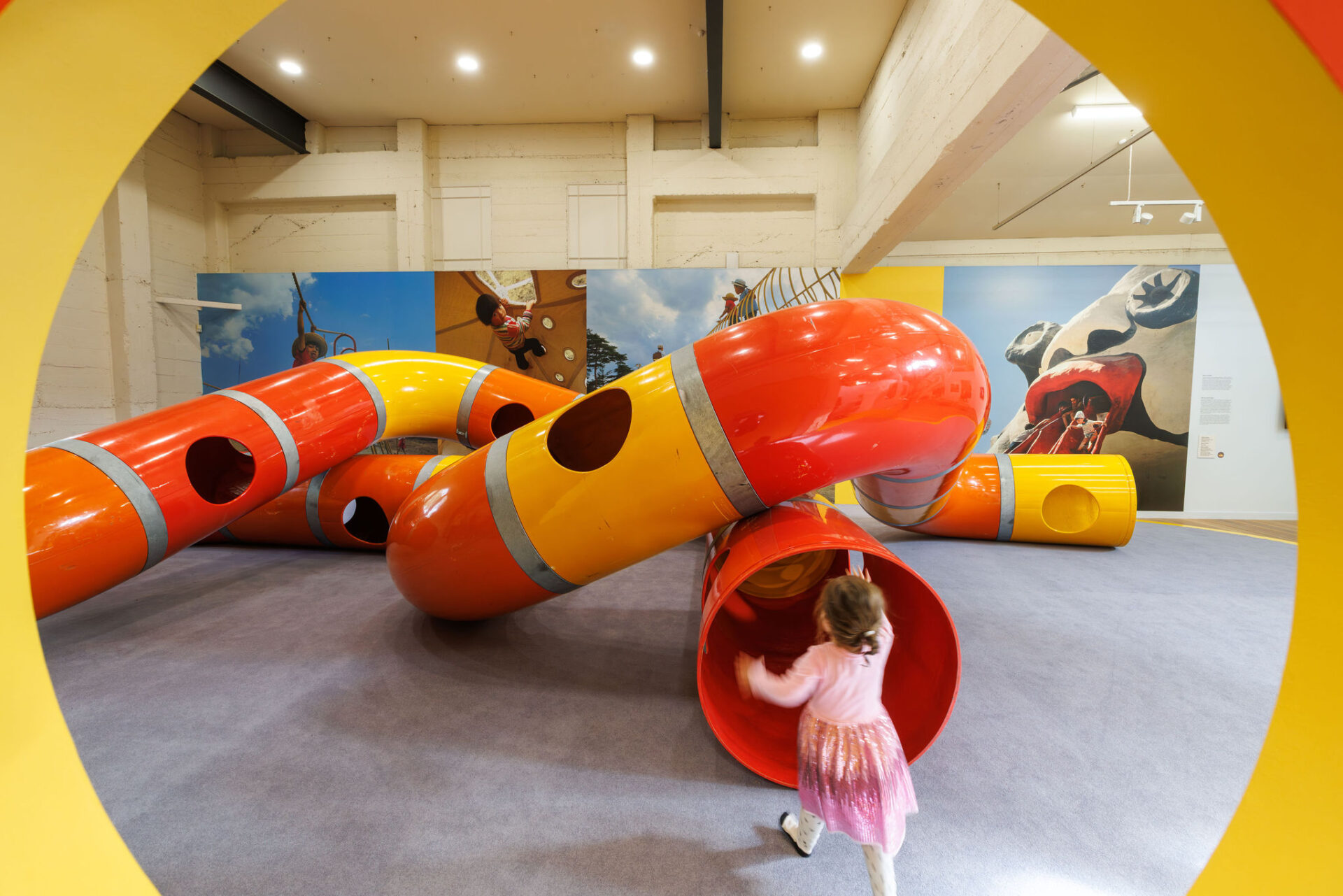
Yvan Pestalozzi, The Lozziwurm, 1972/2016. The Playground Project Melbourne, install view, 2025. Photo Timothy Burgess. Courtesy Incinerator Gallery MVCC.
The Lozziwurm is a simple design made of one straight and one curved tubular element, joined by pipe clamps. Shapes can be made for indoor and outdoor display and encourage free-flowing, kinetic play. At once a play sculpture and an artwork, The Lozziwurm has been uniquely produced and displayed in over 110 schools, playgrounds, shopping centres, parks and art exhibitions, including Art Basel 1973, where it received the prestigious Swiss Art Award.
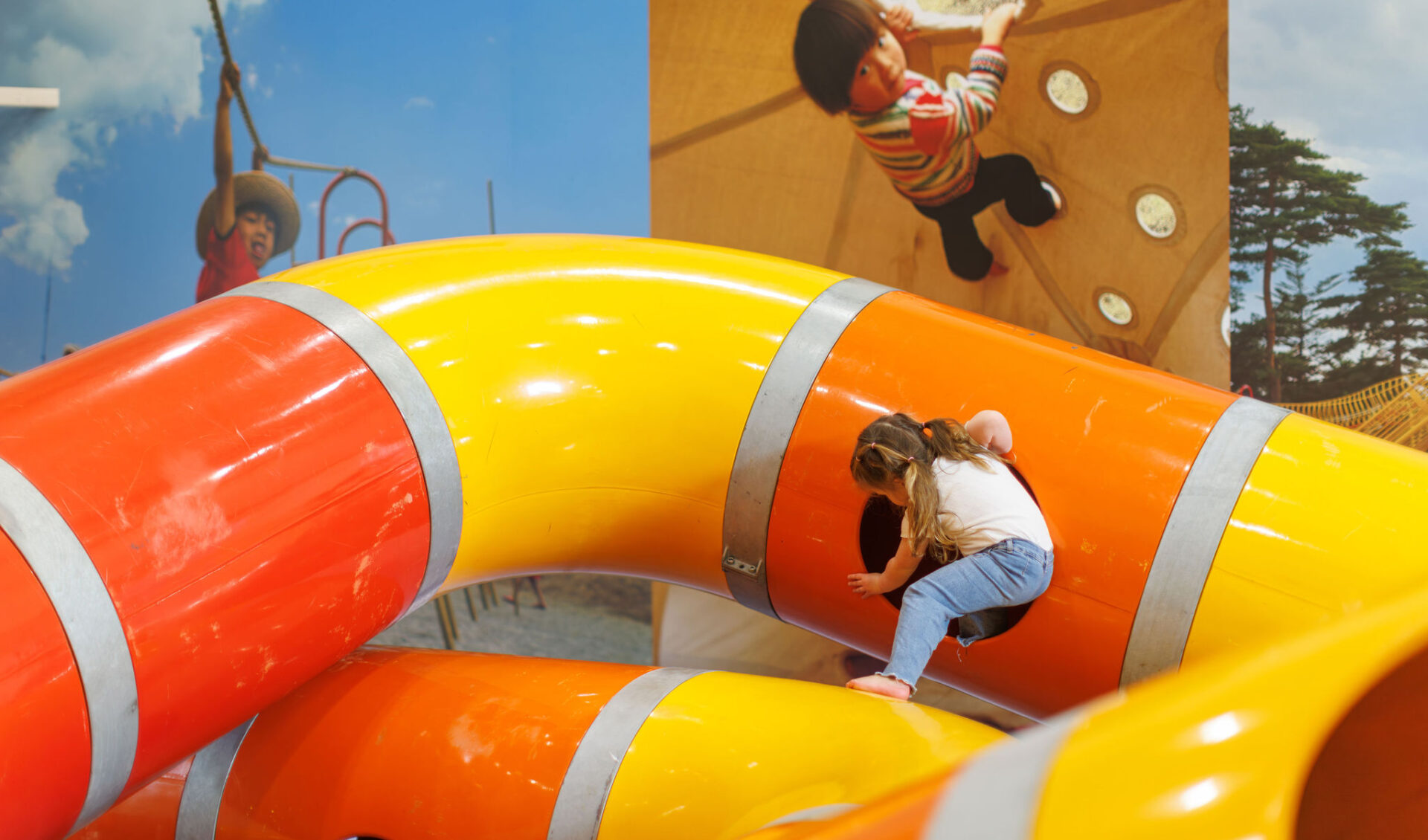
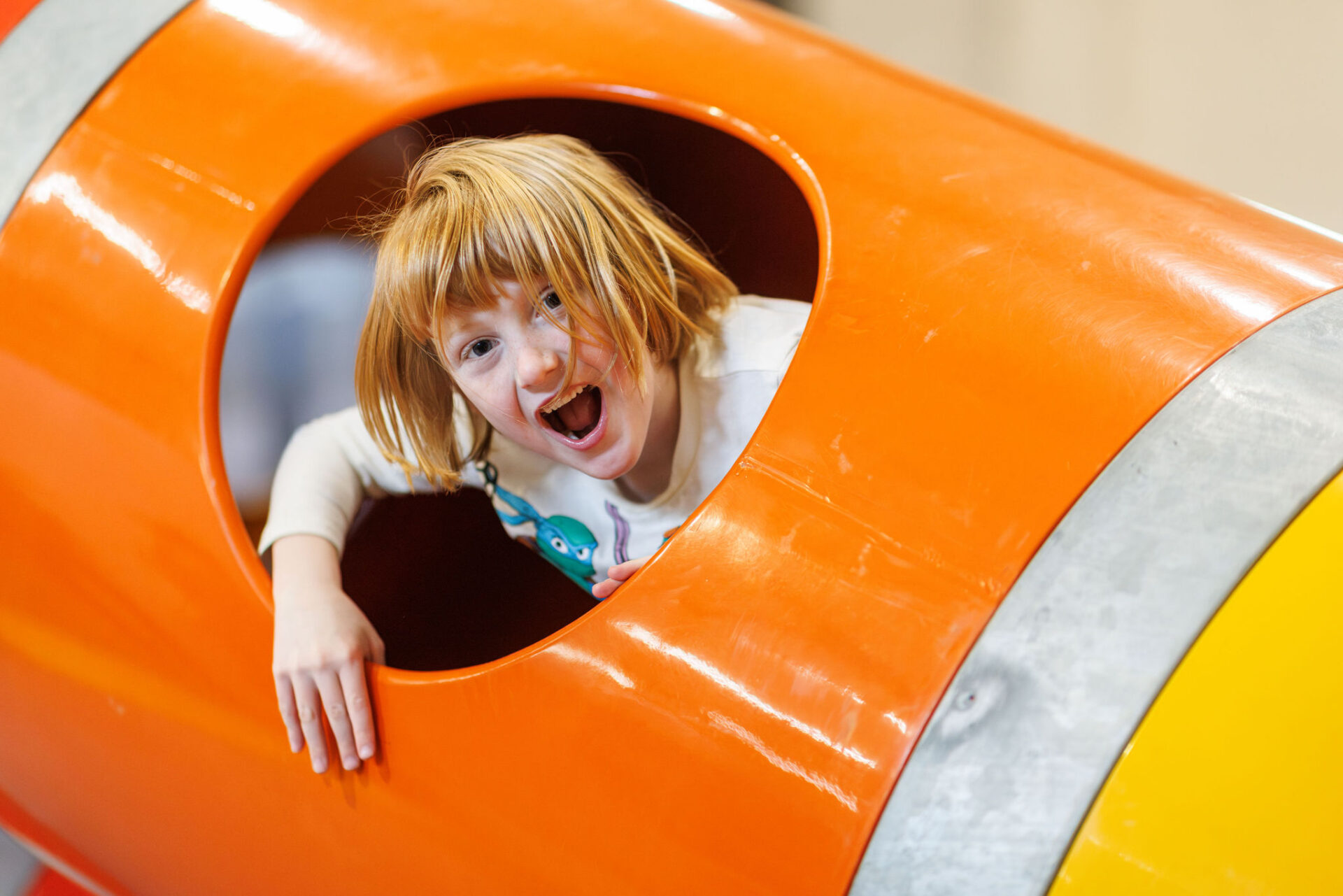


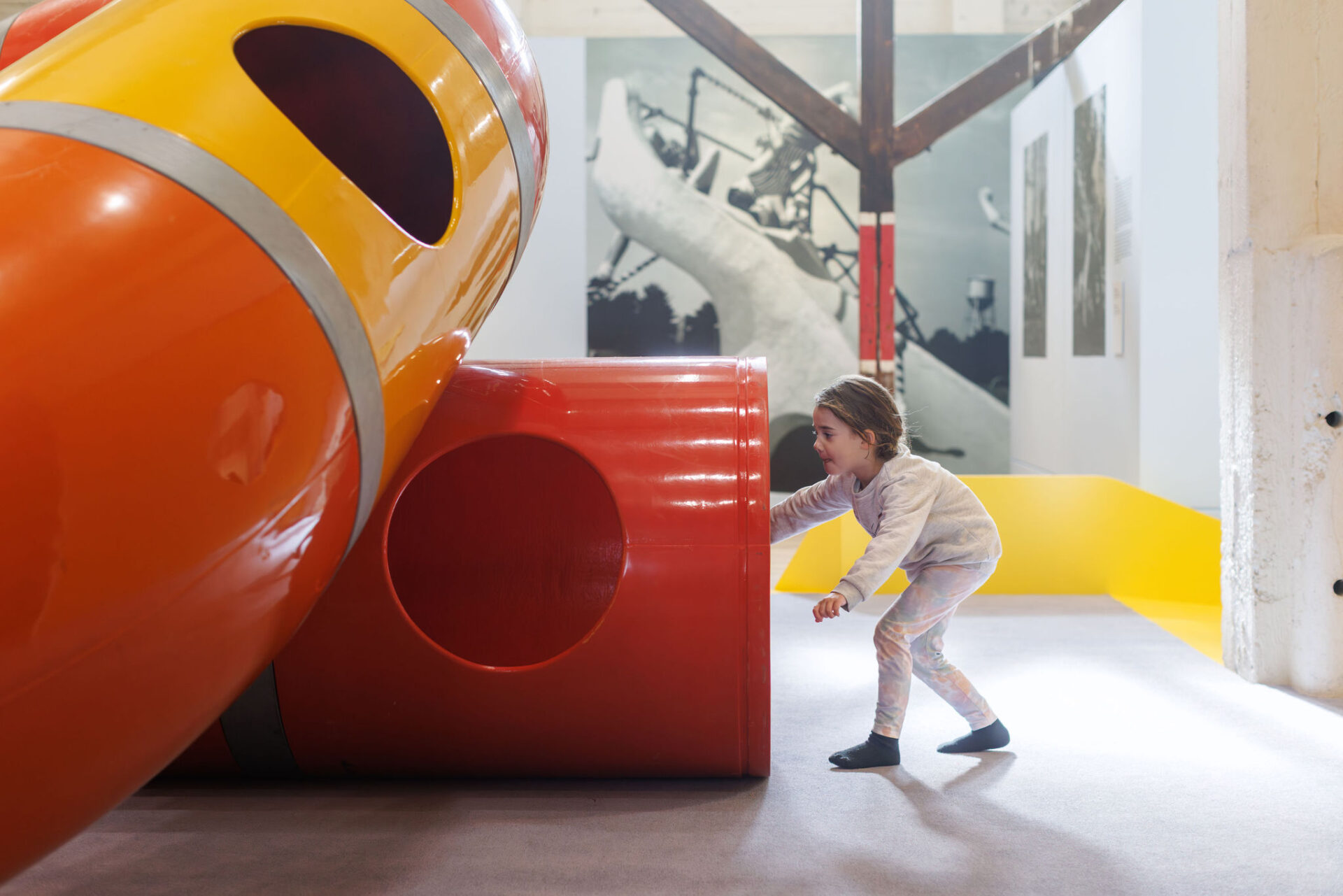
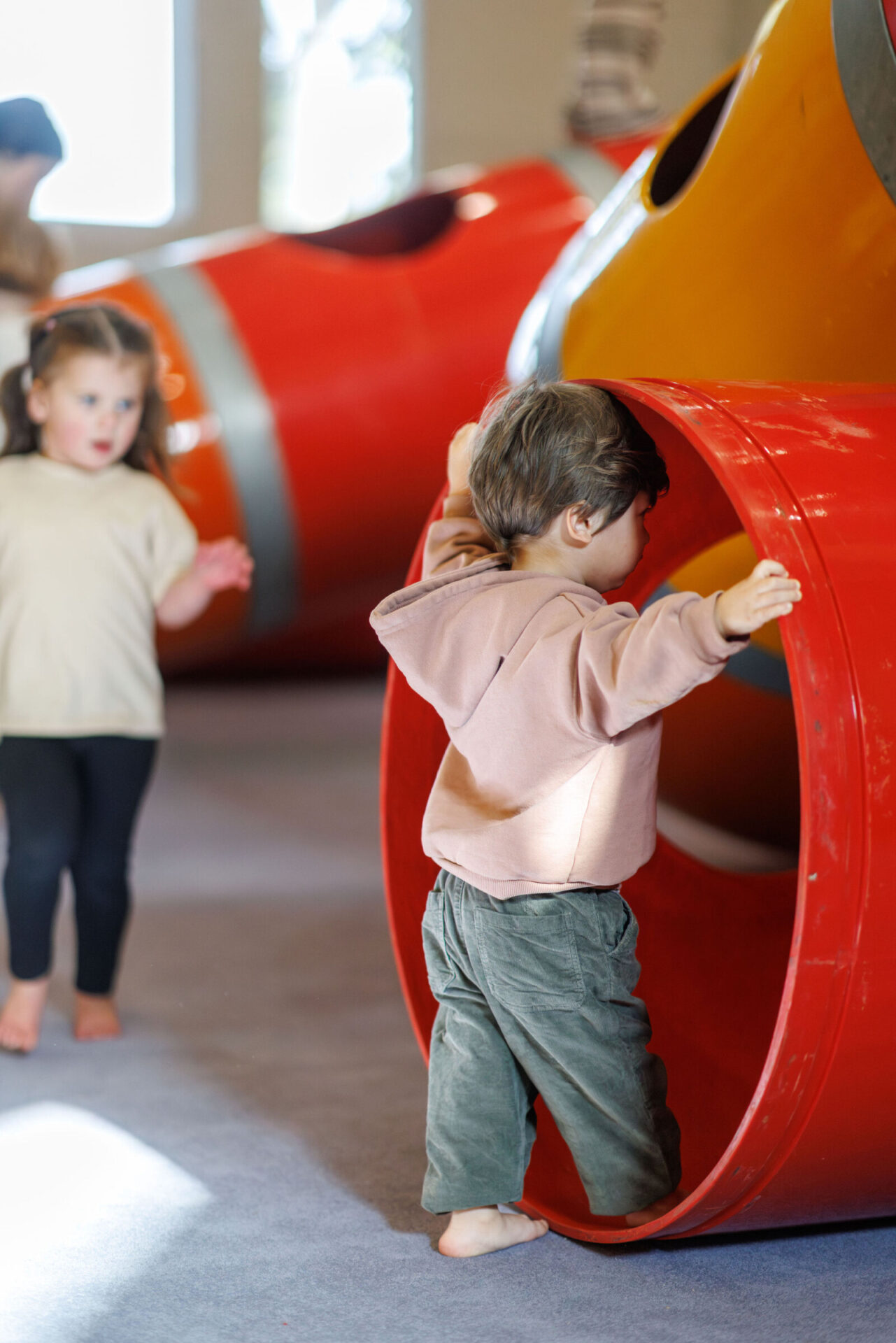
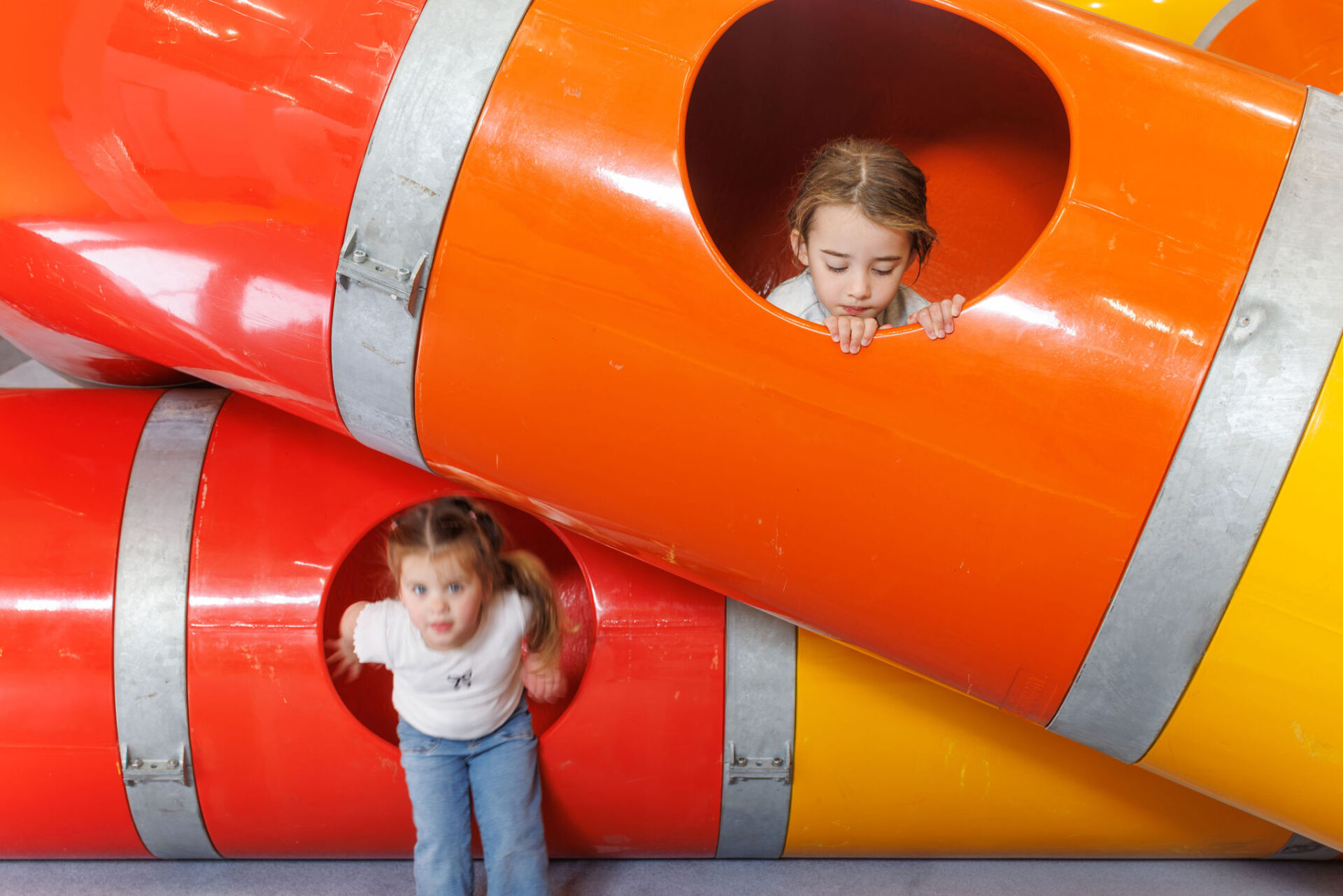
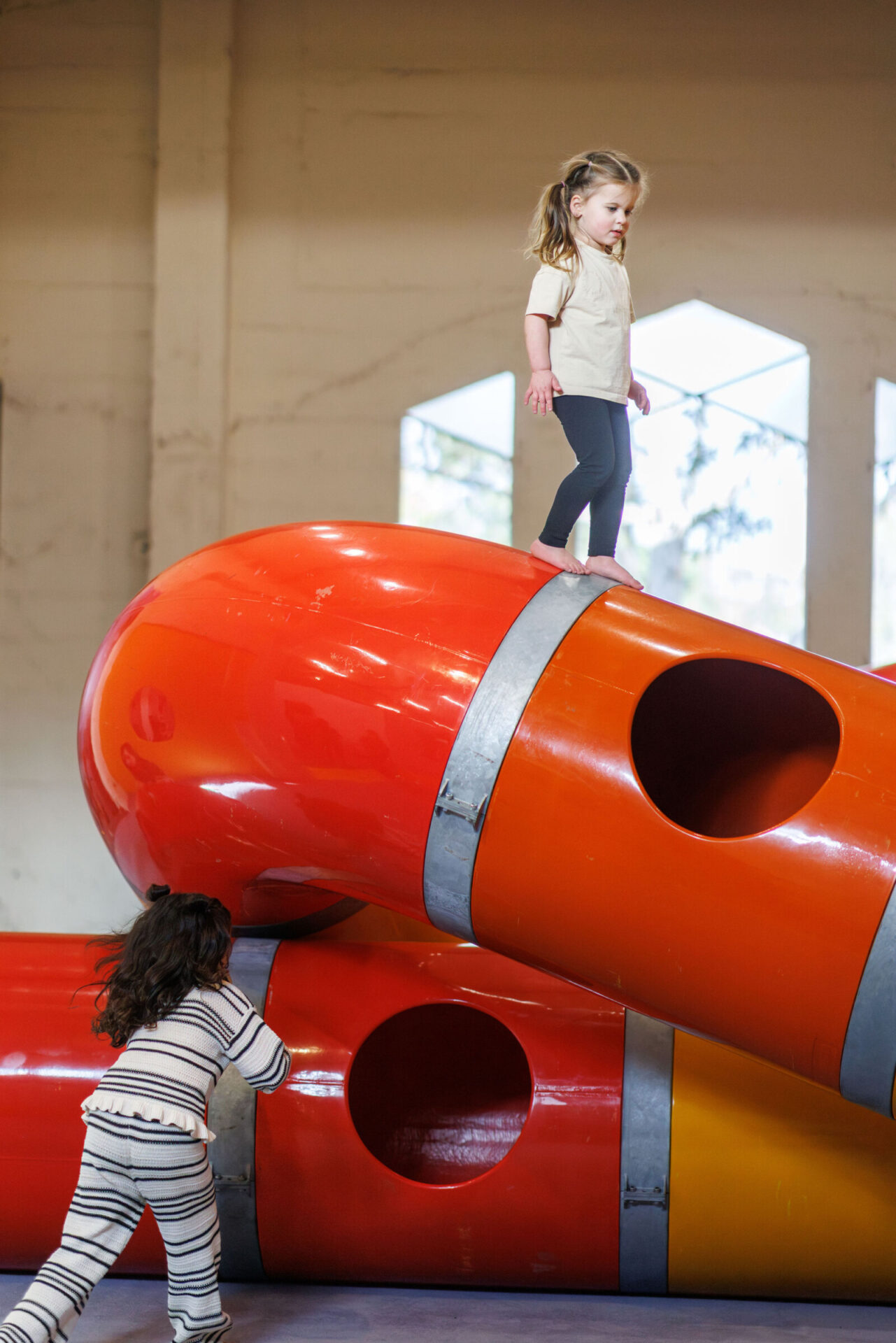
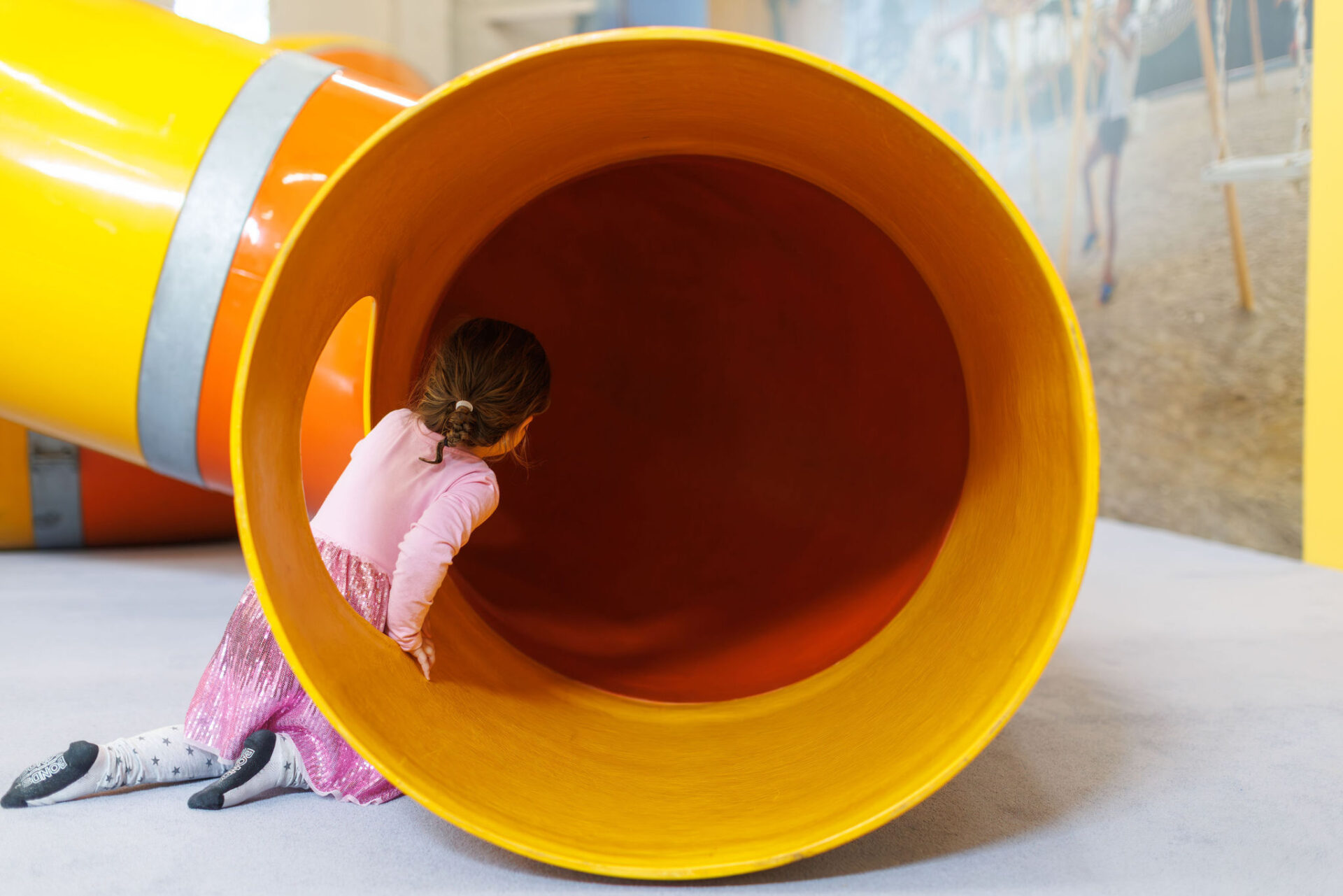
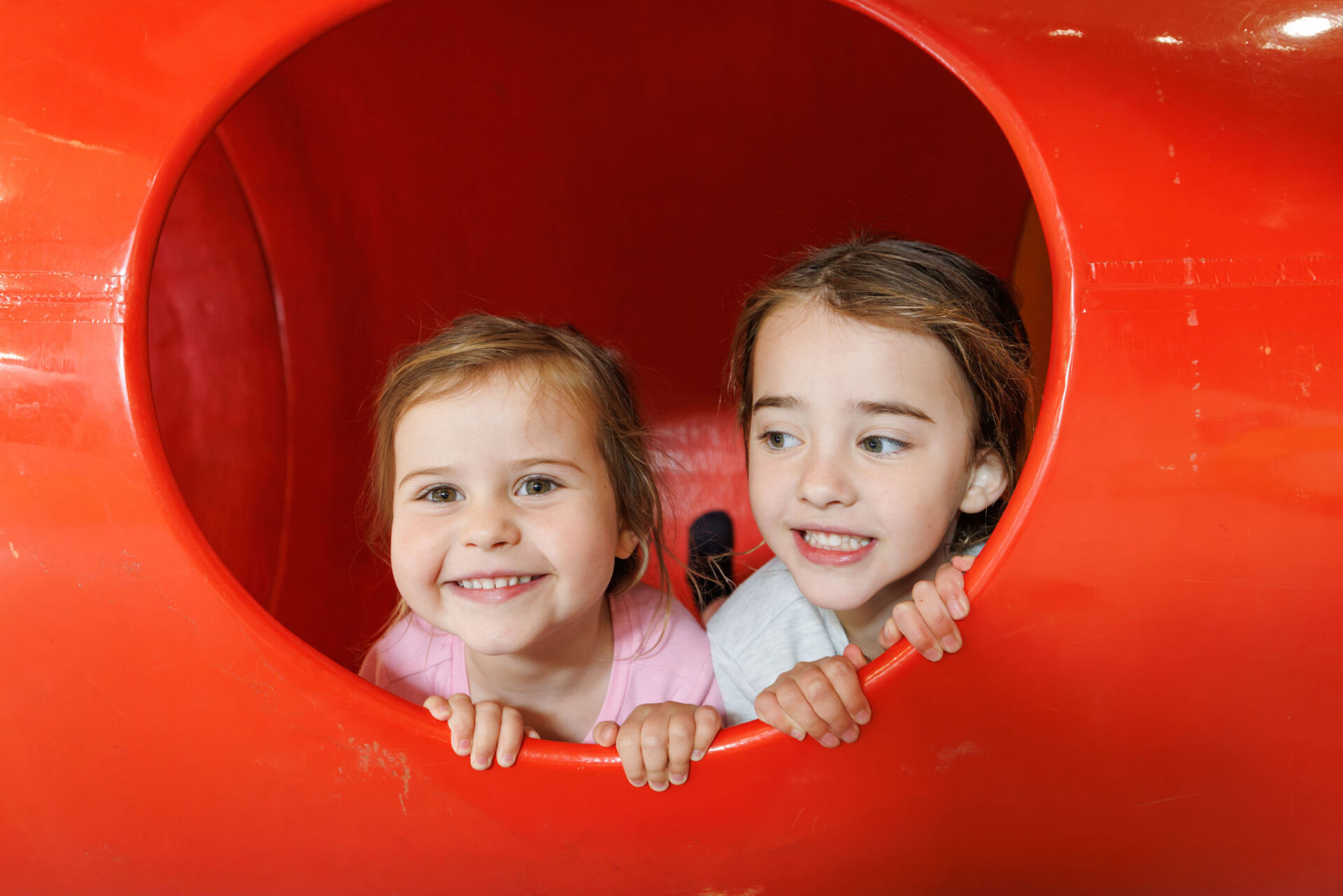
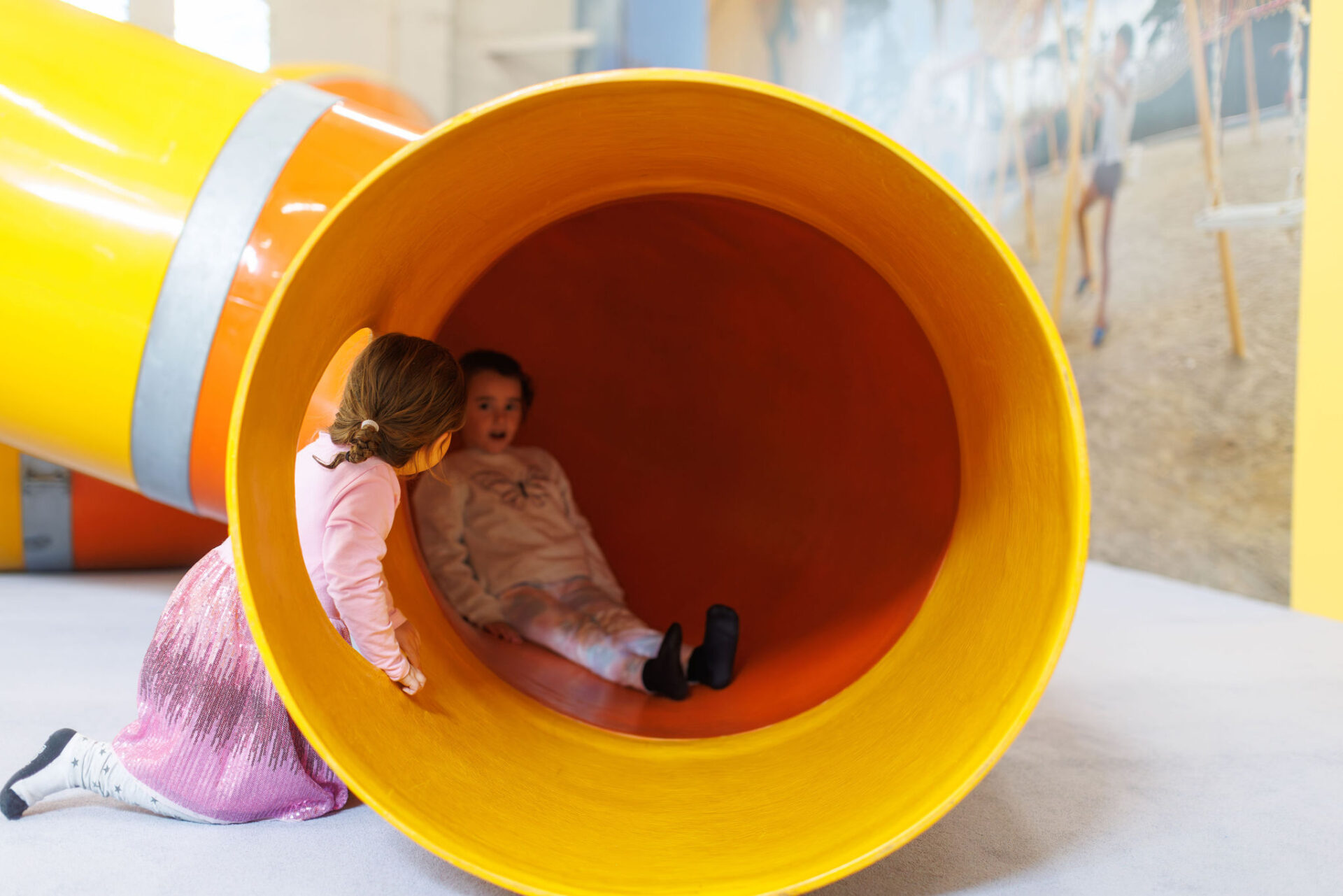
Yvan Pestalozzi, The Lozziwurm, 1972/2016. The Playground Project Melbourne, install view (indoors), 2025. Photo Timothy Burgess. Courtesy Incinerator Gallery MVCC.
The object displayed at Incinerator Gallery was commissioned by Kunsthalle Zürich in 2016 and produced by its original manufacturer for The Playground Project. Following the exhibition in Melbourne, The Lozziwurm joins MVCC’s permanent art collection and continues to be on display outdoors at Incinerator Gallery.
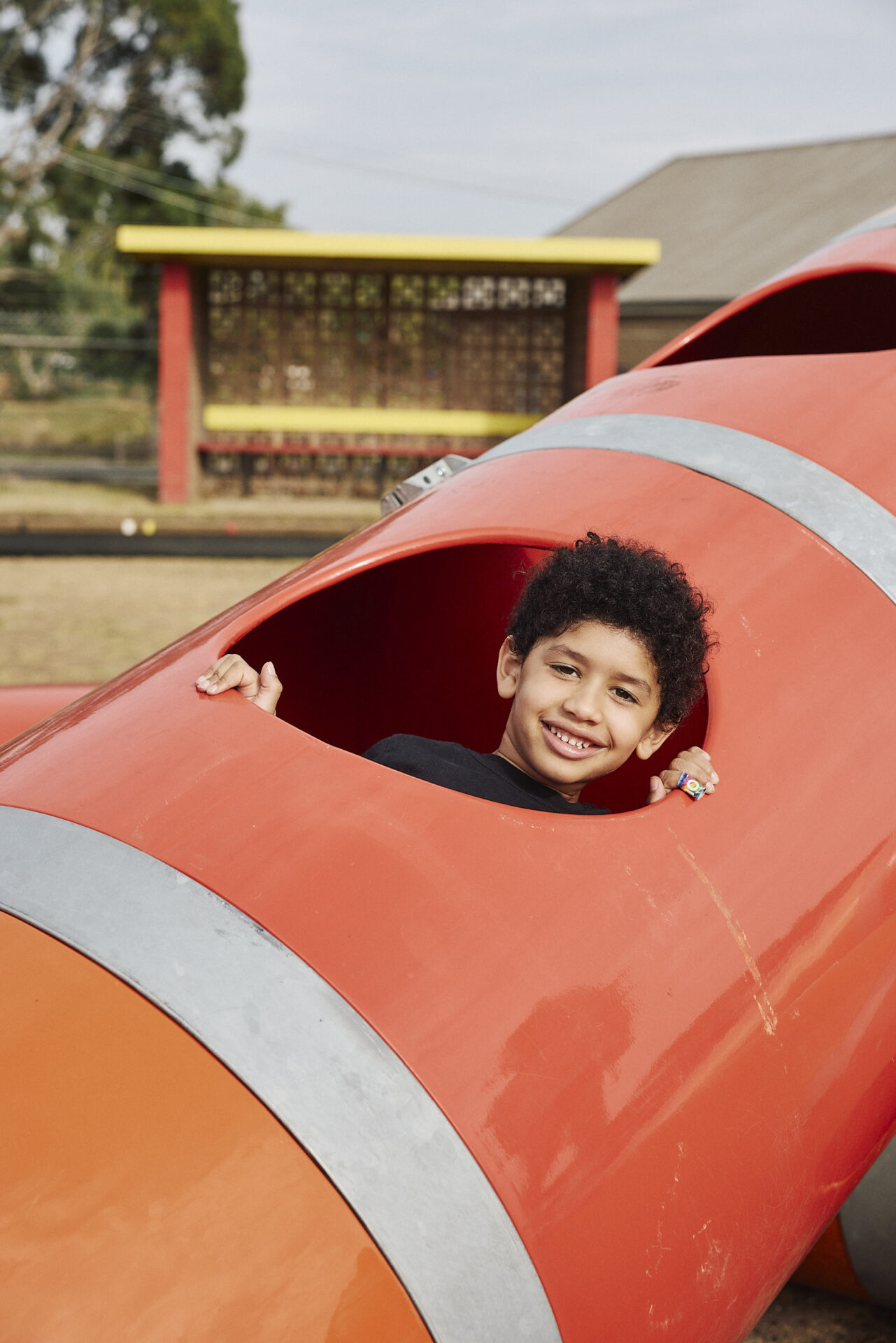
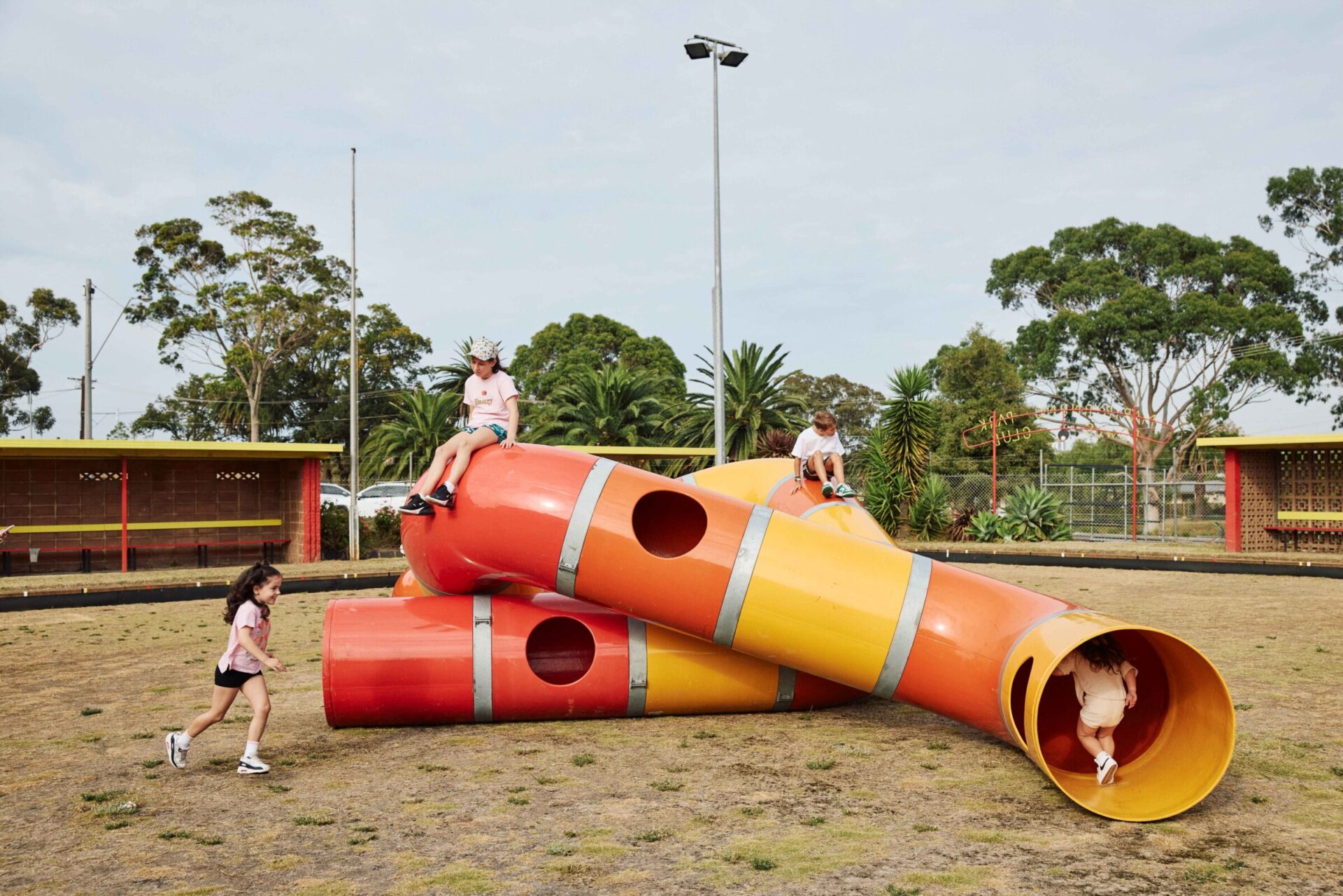
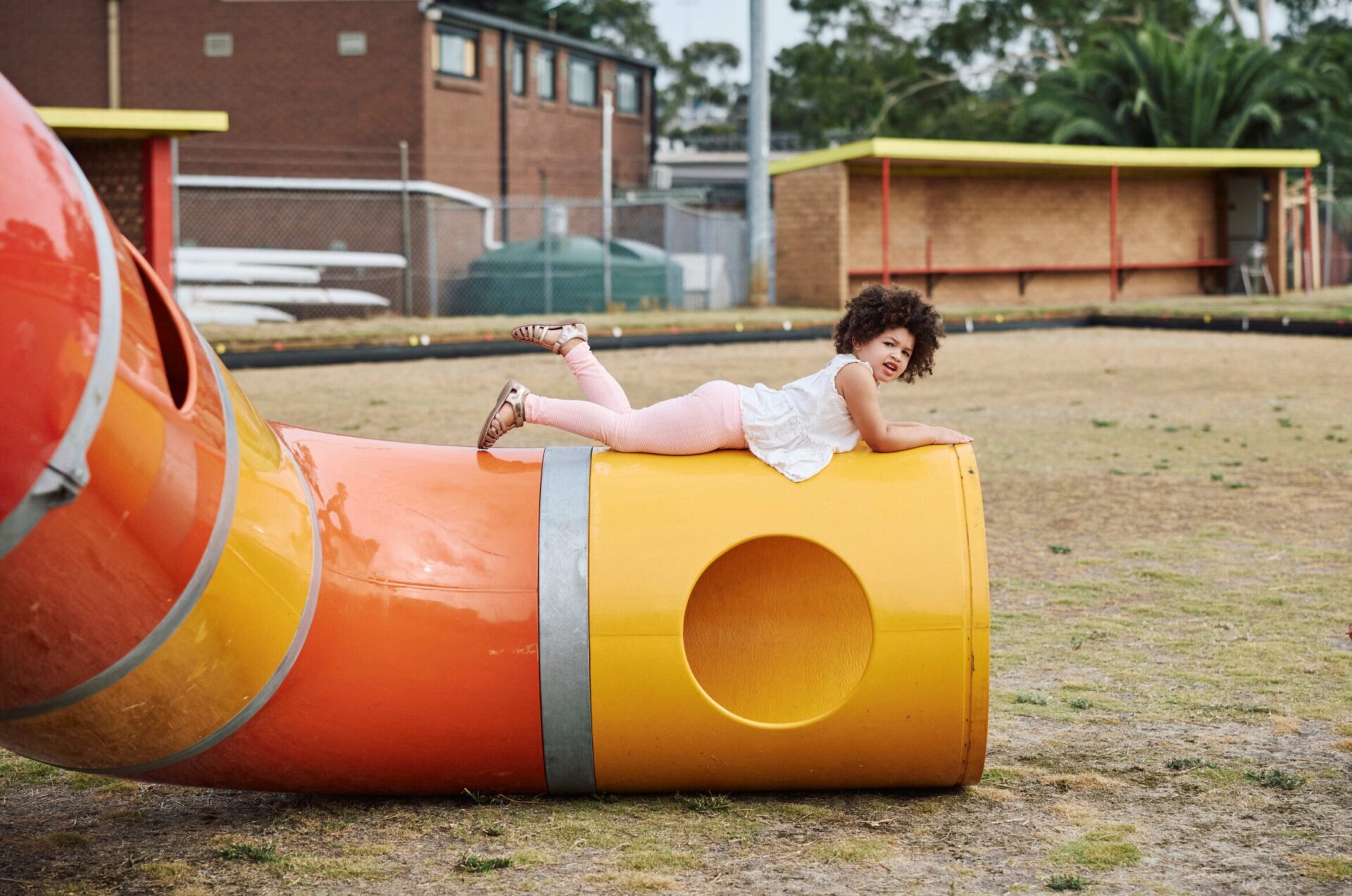
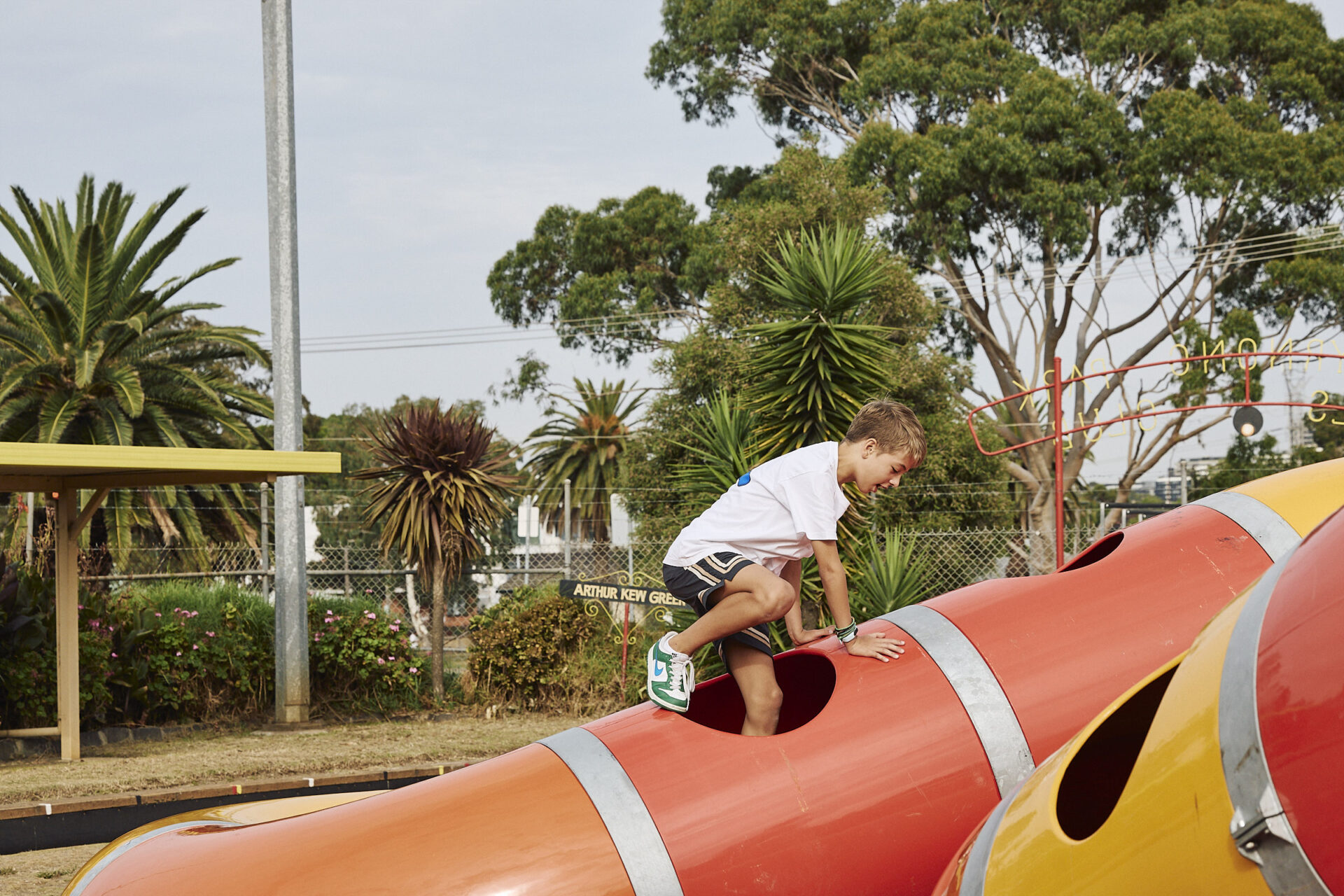
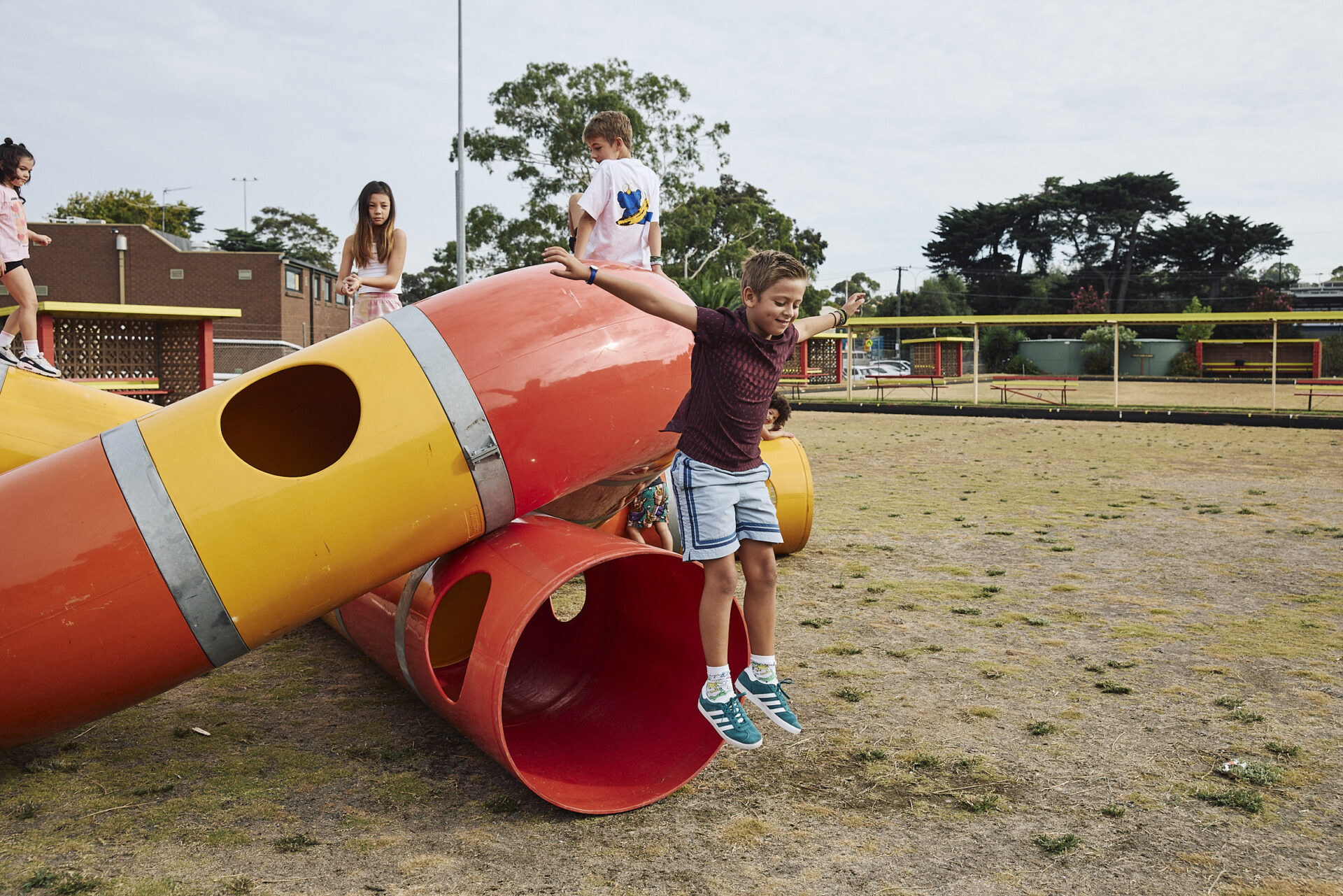
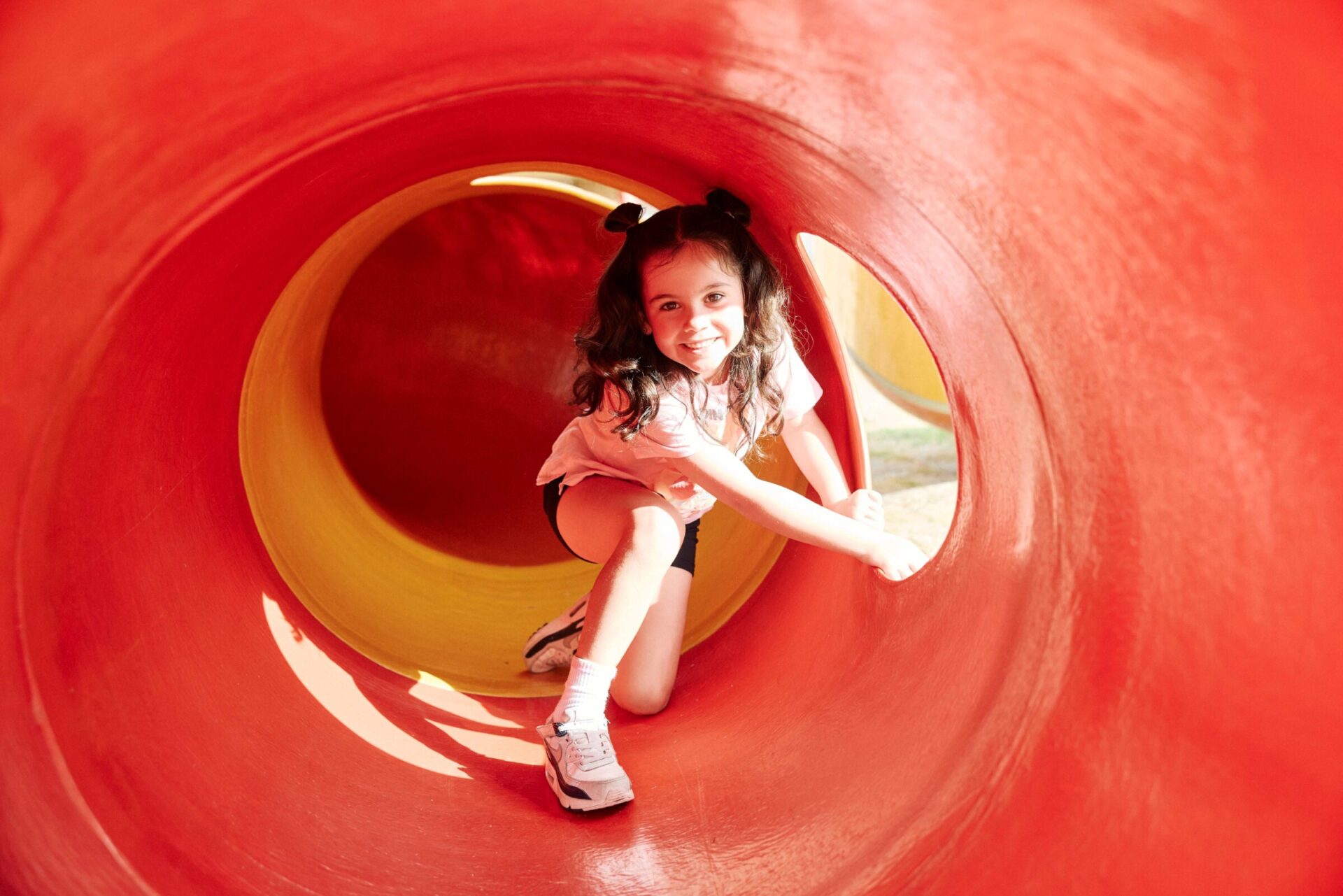
Yvan Pestalozzi, The Lozziwurm, 1972/2016. The Playground Project Melbourne, install view (outdoors), 2025. Photo Timothy Burgess. Courtesy Incinerator Gallery MVCC.
New Australian Content
In response to Gabriela Burkhalter’s acclaimed exhibition, which expanded its curatorial scope for its southern hemisphere debut to case-studies from Japan, China, Africa and Australia, Incinerator Gallery commissioned four new installations and a pop up playground. New research was also presented in The Playground Project Melbourne with key local examples of Play Sculptures and Adventure Playgrounds.
New Commissions
Playgrounds and Public Art
Indoors, The Brutalist Playground (2015) by Australian artist, Simon Terrill and the UK-based design collective, Assemble, delights audiences in the heritage-listed Boadle Hall Gallery and features among the archival presentation of Australia’s leading Adventure Playgrounds, The Cubbies (est. 1974) and The Venny (est. 1982).
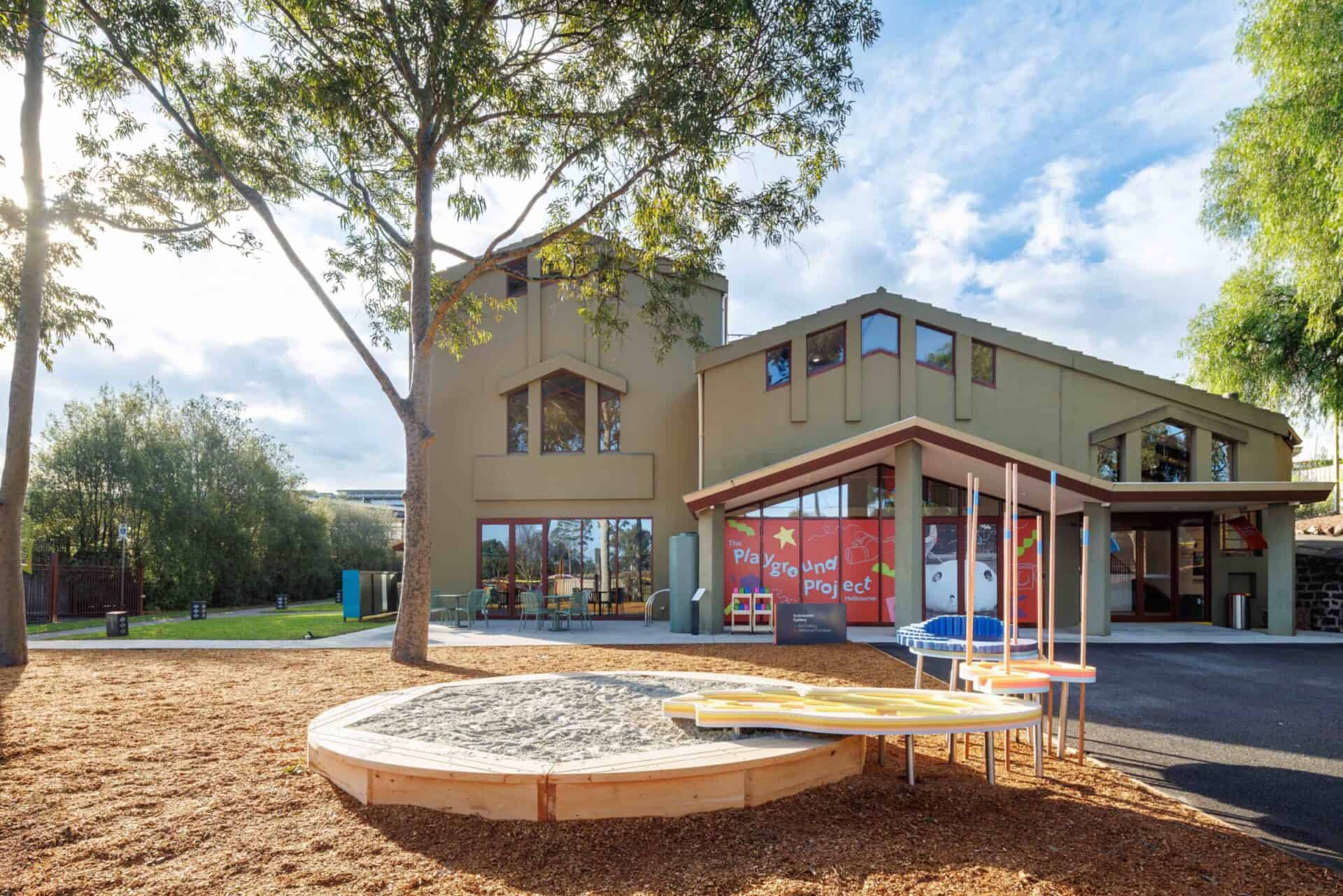
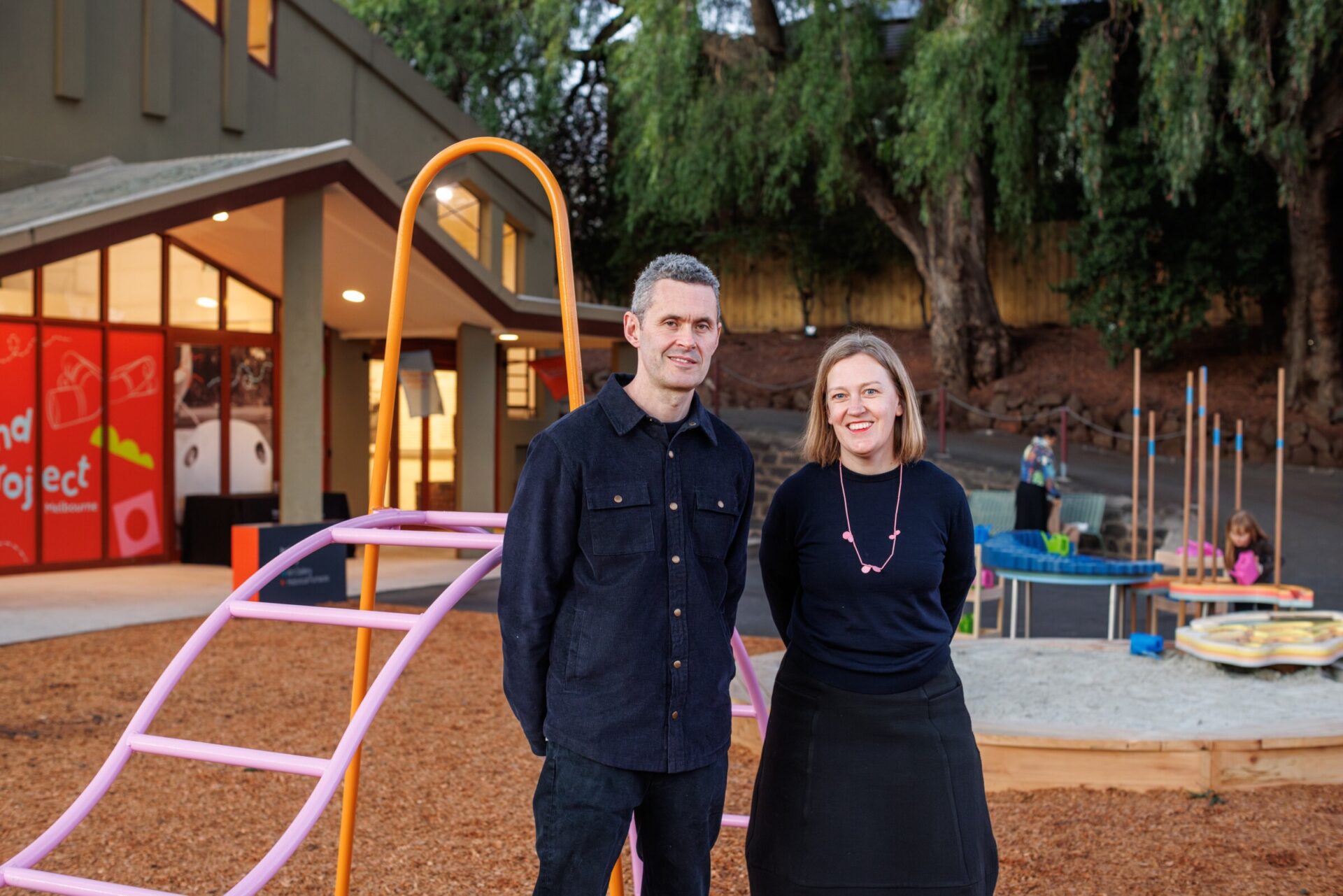
Outdoors, kids are invited to explore The Ringtales Playground by BoardGrove Architects, babanh-u laangi-yuyuk-a (Mother of Pearl), a First Nations Playable Public Art Commission by Trawlwoolway artist, Edwina Green, and a new iteration of Round Table (2017/2027), a seminal work exploring care, childhood and play by Mary Featherston AM and Emily Floyd.
New Research
Play Sculptures and Adventure Playgrounds
The art and life of Anita Aarons is a major new contribution to the exhibition and living archive of The Playground Project. Anita Aarons (1912–2000) was an Australian-born sculptor, designer, art teacher, editor and curator. In 1938, she became a founding member of the Contemporary Art Society to promote modern art in Australia. When her daughters started playing on one of her sculptures, she turned her interest to play sculptures.
In the 1950s, Aarons wrote a letter to the Children’s Library and Crafts Movement, which had been involved in after-school activities and travelling libraries since 1924. In her letter, Aarons referred to Egon Møller-Nielsen’s play sculpture in Sweden, which “had been tried with great success and excitement”. In response, Mary Matheson, the secretary of the Children’s Library and Crafts Movement, encouraged the Mayor of Sydney to install a play sculpture near the Children’s Library in Cook and Phillip Park.
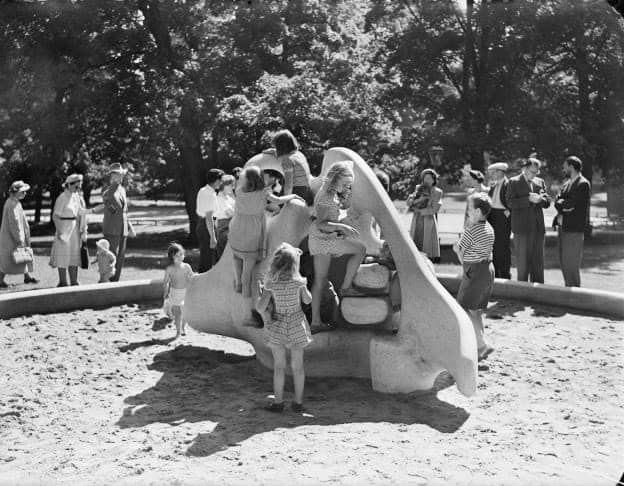
Egon Møller-Nielsen, Birdhouse (Tufsen), Stockholm, Sweden, 1940. Courtesy The Playground Project.
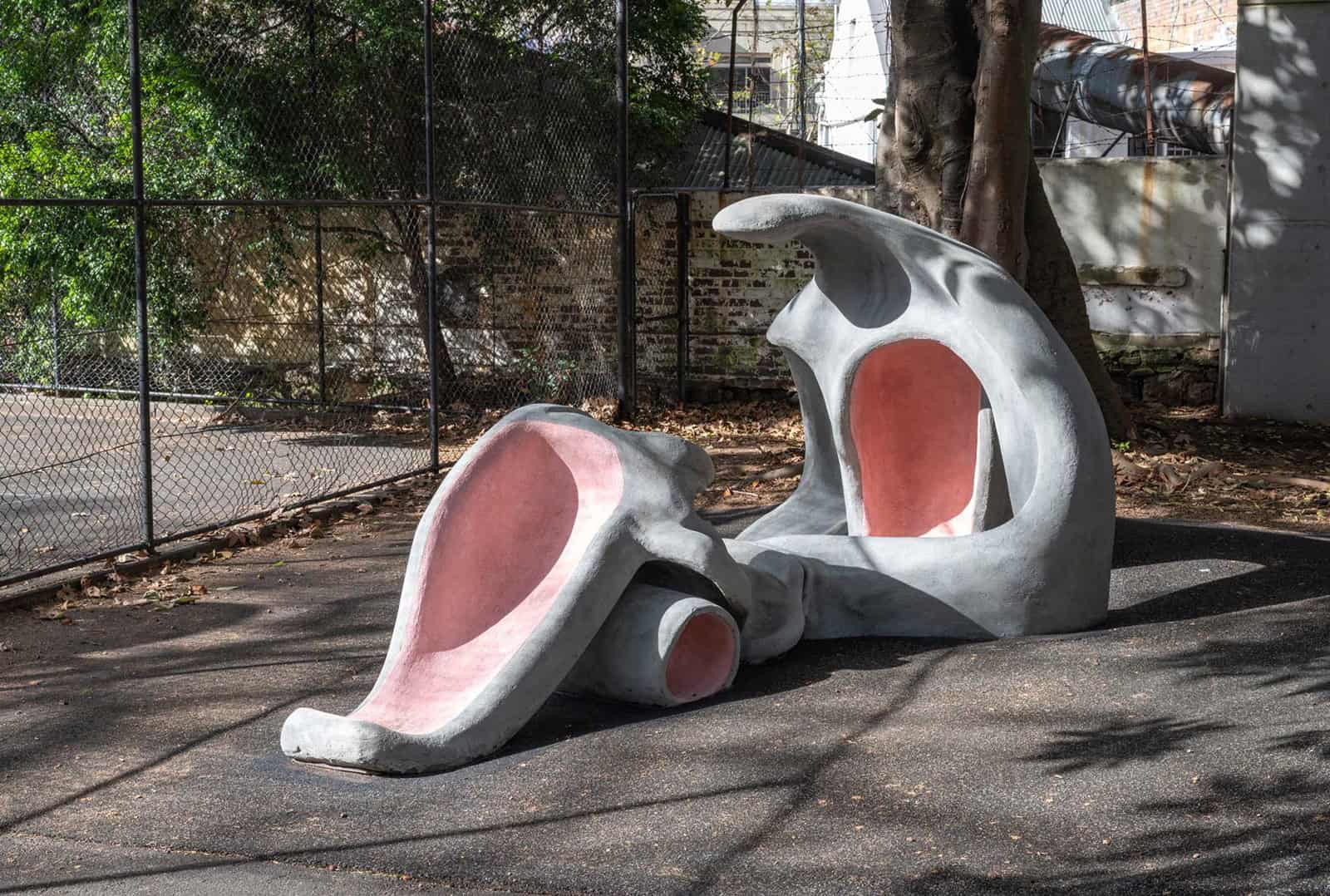
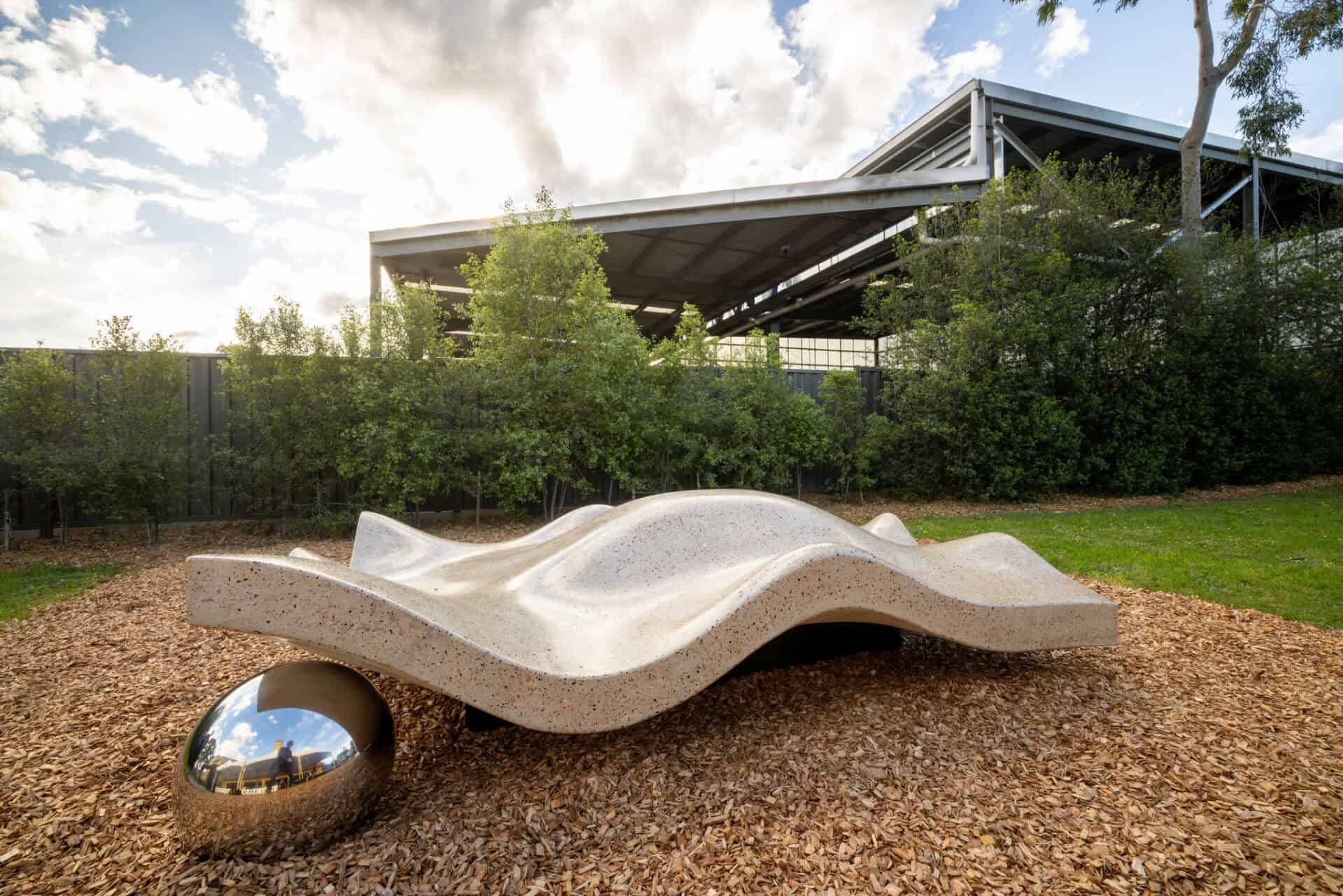
Anita Aarons, Earth Mother, 1952 (restored 2023), Sydney (install view). Courtesy Anita Aarons.
In 1952 Aarons realised Earth Mother, a sculpture cast in concrete with a smooth surface to allow a tactile experience. In 2023, Earth Mother underwent conservation and the original grey and pink colours were restored. It is a prime example of Play Sculptures, which feature as one of four archetypes of playground design in the exhibition.
Aarons moved to Toronto in 1964, where she worked as an exhibition curator, gallerist and editor. Her vision was to combine craft, architecture and modern art to create a meaningful public space. In the 1980s Aarons returned to Australia and lived in Melbourne.
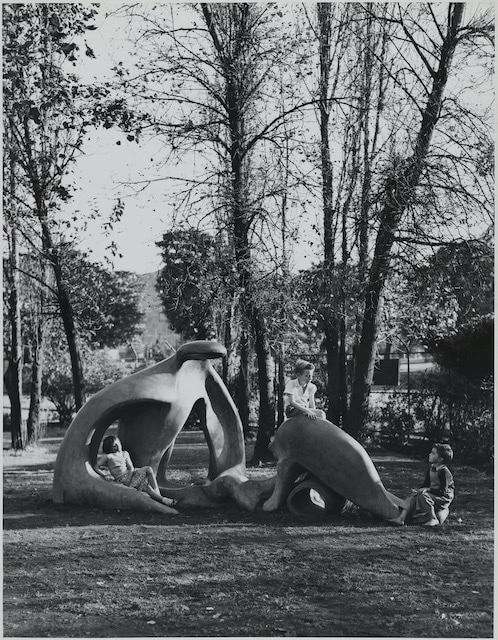
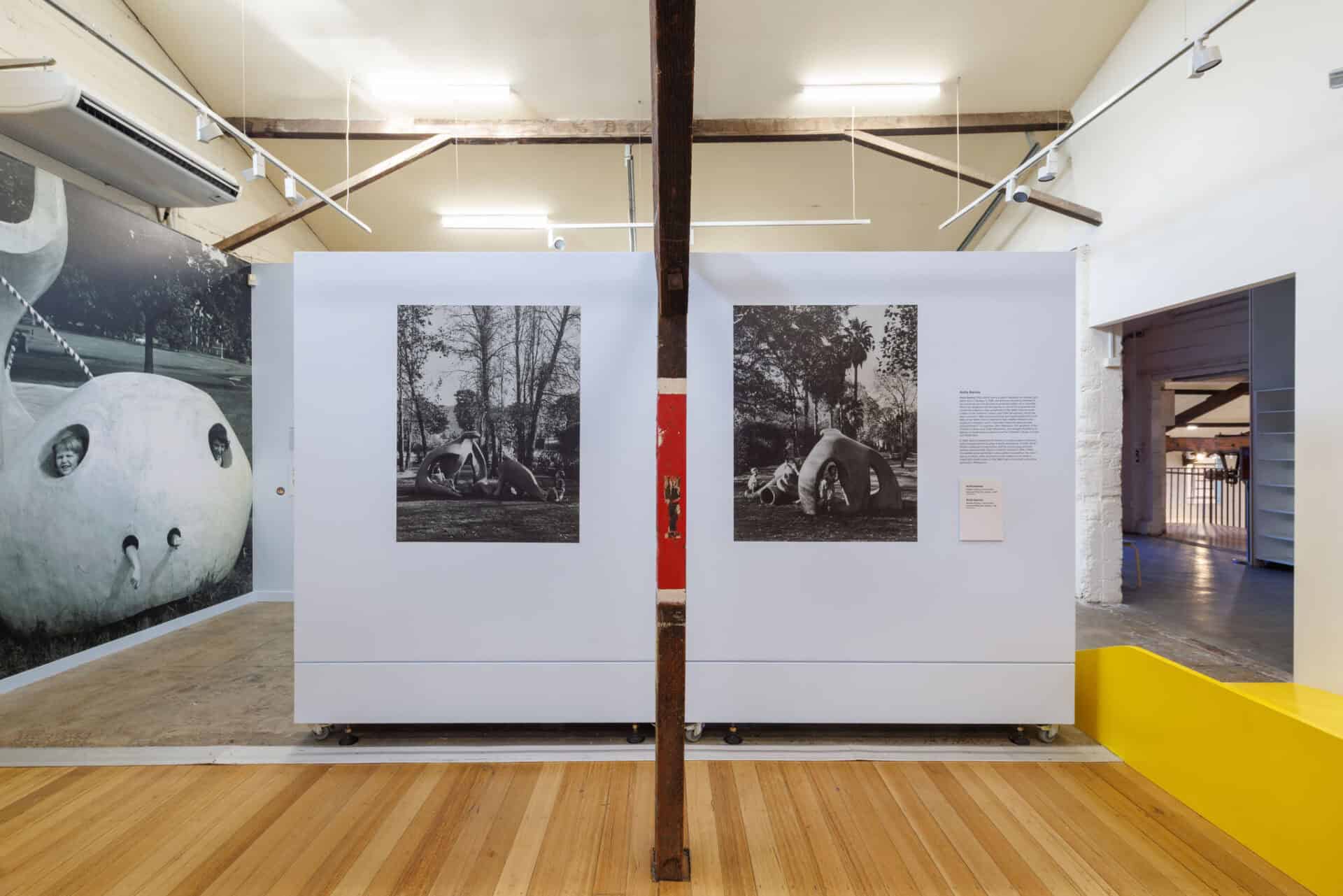
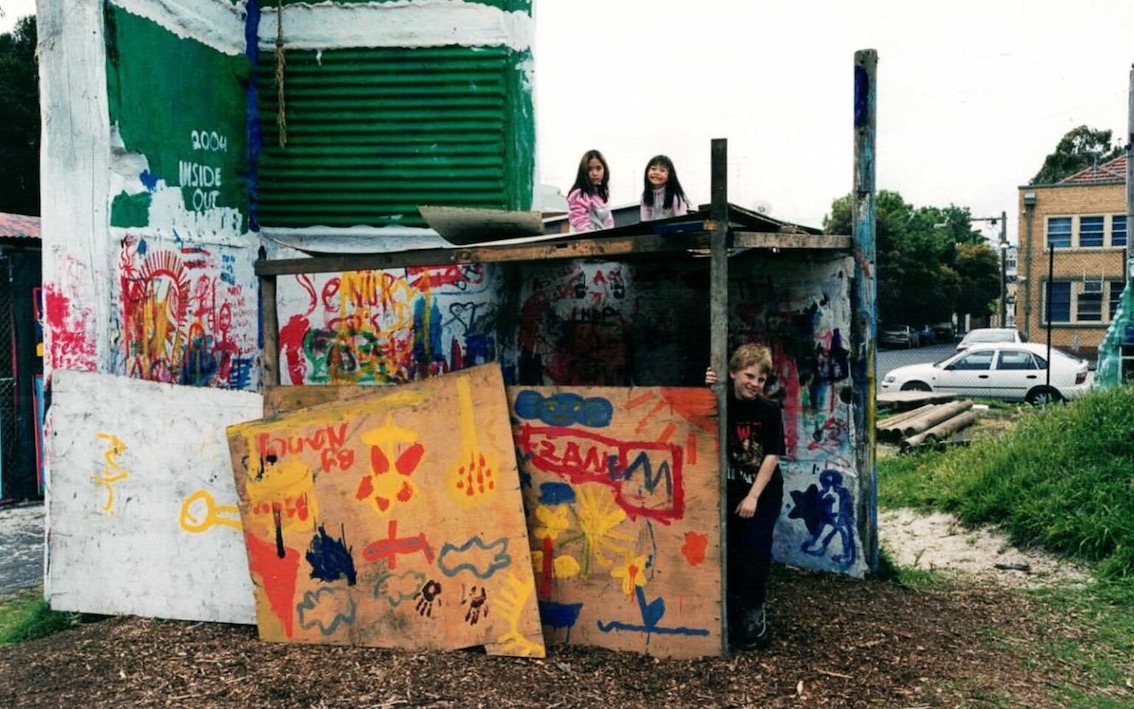
Extensive research was conducted by the Incinerator Gallery about Melbourne’s pioneering Adventure Playgrounds, The Cubbies and The Venny, which feature extensively in the exhibition and activation program of The Playground Project Melbourne.
For more information:
Public Program
Produced with Education Partner, Monash Art Design Architecture (MADA)
For more information:
Education
Produced by Incinerator Gallery with The Venny and Barking Spider Creative
The Playground Project Playlist
To celebrate the launch of The Playground Project Melbourne, DJ Mike Gurrieri (PBS Radio) curated The Playground Project Playlist 2025. Featuring 30 tracks in the joyful spirit of the exhibition and ranging from Italian 70s disco-pop to the best of contemporary First Nations tunes, the playlist debuted on 28 June 2025 at the private view and made special appearances throughout the activation program.
Curated by:
Designed by:
Produced by:
Project Partner:

Major Partner:

Education Partner:

PROGRAM PARTNERS:




Media Partners:


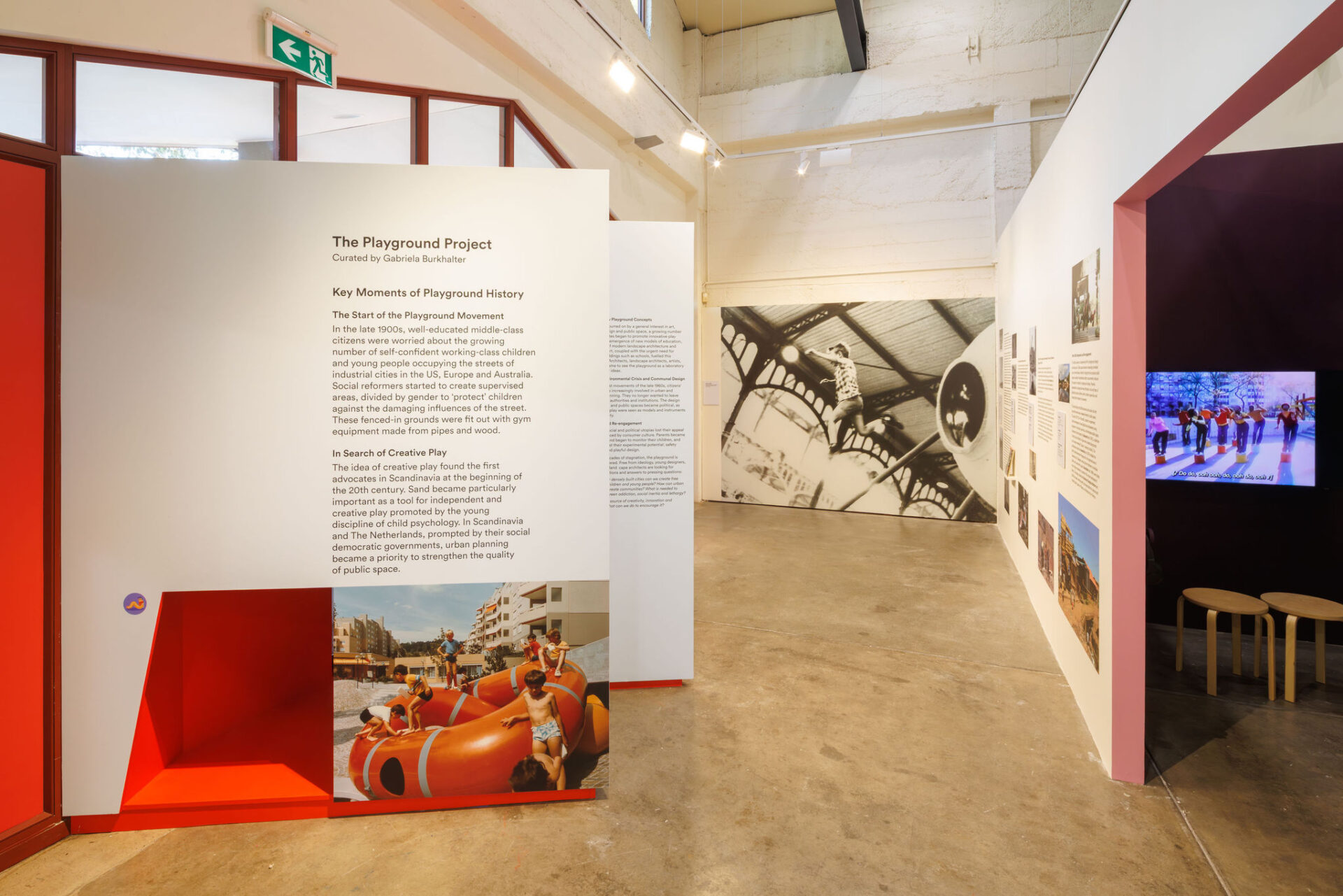
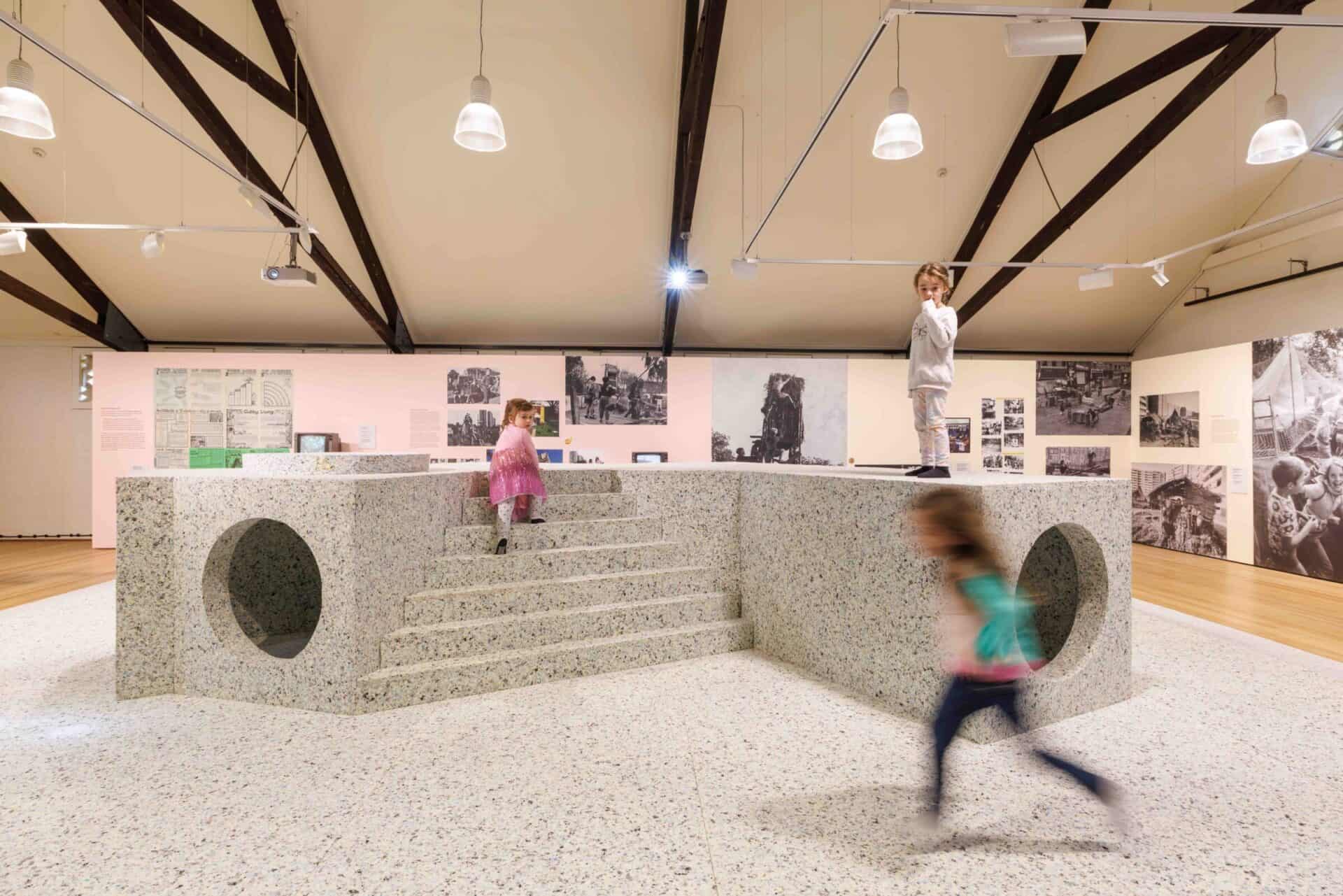
The Playground Project Melbourne, install view (atrium), 2025. Photo Timothy Burgess. Courtesy Incinerator Gallery MVCC.
Presented with contributions by:
INTERNATIONAL TEAM
Daniel Baumann, Project Commissioner and Former Director, Kunsthalle Zürich
Monika Milakovic, Head of Administration, Kunsthalle Zürich
MVCC Project Team
Curatorial
Jade Niklai, Head of Visual and Public Art
MJ Flamiano, Public Art Officer
Bridget Forbes, Education and Public Programs Officer
Fiona Cabassi, Special Projects Officer
Jake Treacy, Curator
Communications
Daisy Lewis-Toakley, Graphic Design
Alexandra Zafiriou, Communications Consultant
Maryanne Karlovic, Senior Coordinator Communications
Deveta Patel, Senior Publicist
Emma Patterson, Senior Marketing Officer
Mark Kearney, Publicist
Lauren Draper, Marketing
Production
Melbourne Art Services
Riverside
SS Signs
MONASH ART DESIGN ARCHITECTURE – EDUCATION PARTNER
Prof Mel Dodd, Dean
Timothy Moore, Lecturer
Dr Kathy Waghorn, Professor
Bernadette Wilson, Department Manager
Ellen Brummel, Communications
Michelle Willis, Publicity
JELLIS CRAIG FOUNDATION – MAJOR PARTNER
Elisabeth Morello, Foundation General Manager
Natalie Morello, Client Services and Sponsorship
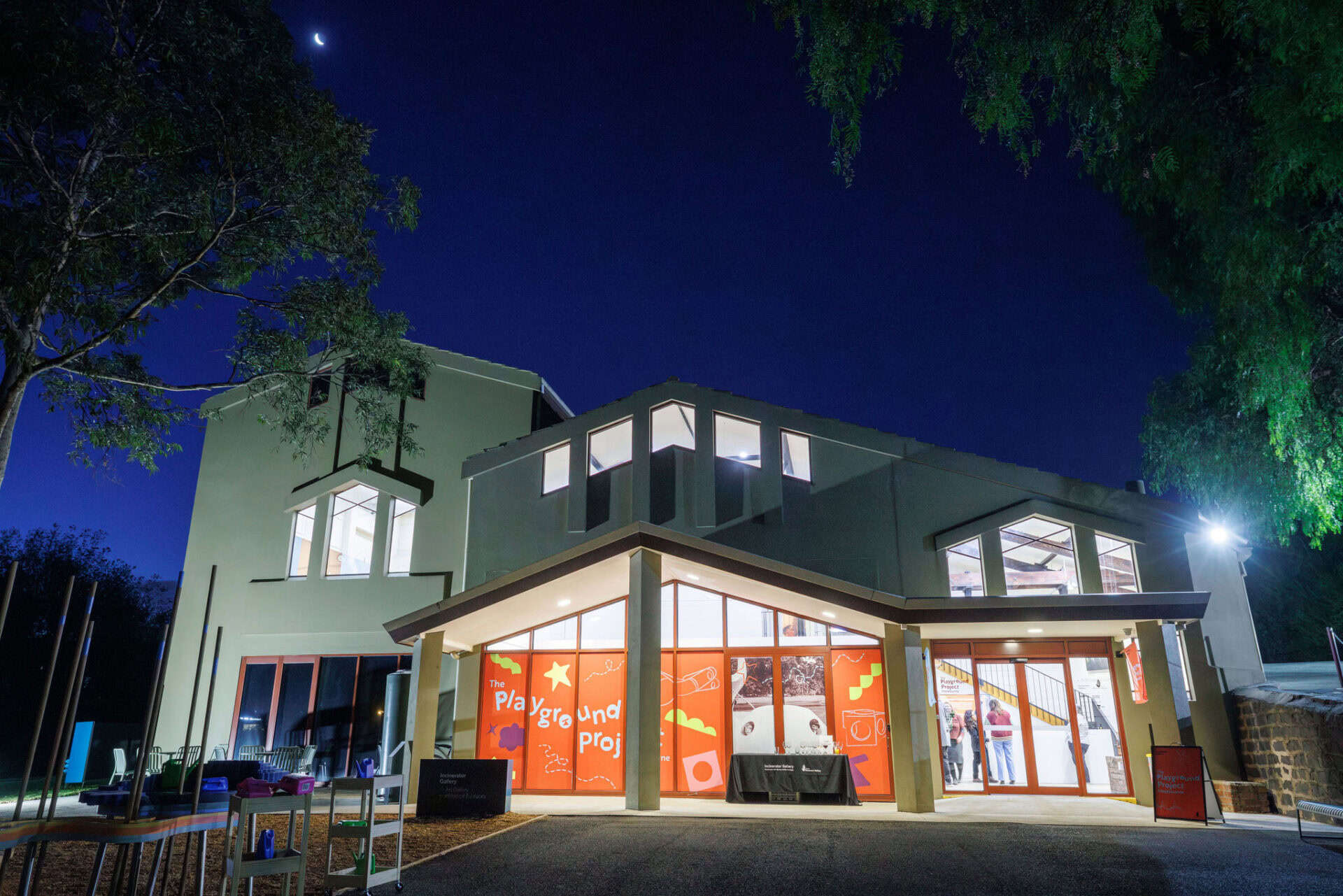
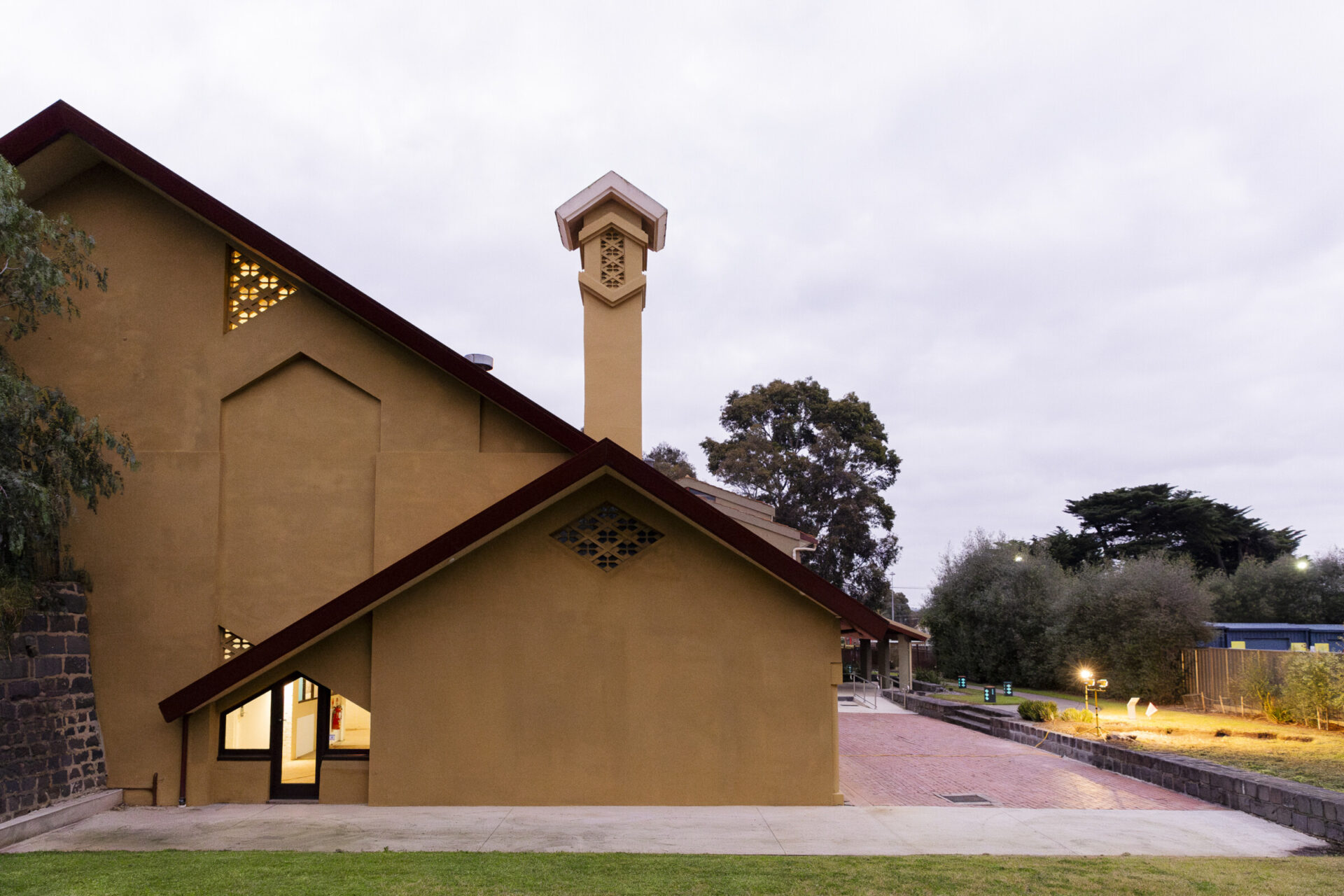
The Playground Project Melbourne, Incinerator Gallery, 2025. Photo Timothy Burgess. Courtesy Incinerator Gallery MVCC.